Asustor and TerraMaster are the two most common alternatives to Synology and QNAP in Australia, and both target budget-conscious NAS buyers, but they are not interchangeable. Asustor has stronger Australian distribution through Dicker Data, a more established software platform in ADM, and wider retail availability at stores like Mwave, Scorptec, and PLE. TerraMaster offers aggressive pricing and impressive hardware specs, particularly at the mid-range, but has Australian distribution through Encomtech Australia and a less mature operating system in TOS. Choosing between them comes down to how much you value software polish and local support versus raw hardware value for the dollar.
In short: Asustor is the safer pick for most Australian buyers. It has better local distribution, wider retail availability, a more polished OS in ADM, and a documented Australian distributor relationship through Dicker Data. TerraMaster wins on pure hardware specs per dollar, especially with models like the F4-425 Pro (Intel N305, 8GB DDR5 RAM for $1,099 at Scorptec), but its software and Australian support trail behind. If you are technically confident and prioritise hardware power, TerraMaster delivers. If you want a more complete out-of-the-box experience with reliable local support, Asustor is the better choice.
Brand Overview: Where They Stand in 2026
Asustor is the NAS arm of ASUS, backed by ASUS's engineering resources and global supply chain. In Australia, Dicker Data is an ASUSTOR distributor, one of the country's larger distributors with account managers on the ground in every state. Dicker Data is an Australian ASUSTOR distributor, but the retailer remains responsible for applicable ACL remedies and any internal escalation path varies by retailer and case. It is not perfect, but it is a defined chain that works.
TerraMaster is a Shenzhen-based manufacturer that has gained traction globally by offering powerful hardware at prices that undercut the established brands. In Australia, TerraMaster identifies Encomtech Australia Pty Ltd as its distributor and TerraMaster Oceania office, authorised for NAS and DAS. Retail availability is narrower, with Scorptec and Mwave carrying most of the range. The available evidence does not establish how Encomtech Australia's after-sales performance compares with other NAS distributors.
For a deeper look at each brand individually, see our Asustor NAS Australia and TerraMaster NAS Australia hub pages.
Software: ADM vs TOS
This is where the two brands diverge most meaningfully. Software is what turns NAS hardware into a usable product, and the gap between Asustor's ADM (ASUSTOR Data Master) and TerraMaster's TOS (TerraMaster Operating System) is significant.
Asustor ADM
ADM is a mature, Linux-based operating system with a desktop-style interface that will feel familiar to anyone who has used Synology's DSM or QNAP's QTS. The app ecosystem is solid: Docker support, Plex Media Server, surveillance (with 4 free camera licenses), Btrfs file system support on most models, and comprehensive backup tools including cloud sync to major providers. ADM's mobile apps for file access and media streaming work reliably, and the platform receives regular security updates.
ADM does not match DSM's polish or depth of first-party apps, but it is a competent, stable platform that handles home and small business workloads without drama. For Docker and virtualisation, Asustor's Portainer integration is straightforward, and the Celeron N5105 and Ryzen V3C14 processors in the current lineup handle containerised workloads well.
TerraMaster TOS
TOS has improved dramatically over the past two years. TerraMaster released TOS 7 in June 2026; current product specifications list Btrfs and EXT4 for internal volumes, not ZFS. The inclusion of ZFS is notable because Synology does not offer it on consumer models and QNAP's implementation is limited to QuTS hero, their enterprise-focused OS. TerraMaster lists Btrfs and EXT4, not ZFS, for internal volumes on the F2-425.
However, TOS still lags behind ADM in several areas. The mobile apps are less refined, the third-party app ecosystem is smaller, automatic update reliability has been inconsistent, and the community support base is thinner. If you hit an obscure configuration issue with ADM, there are forums, Reddit threads, and documentation to draw on. With TOS, you may be on your own. For first-time NAS buyers, this matters more than the spec sheet suggests.
Hardware Comparison: Entry-Level (Under $600)
At the entry level, both brands offer 2-bay NAS units that compete directly on price and specs. This is the segment where most first-time NAS buyers land, and where the choice between Asustor and TerraMaster is most contested.
Entry-Level 2-Bay NAS Comparison
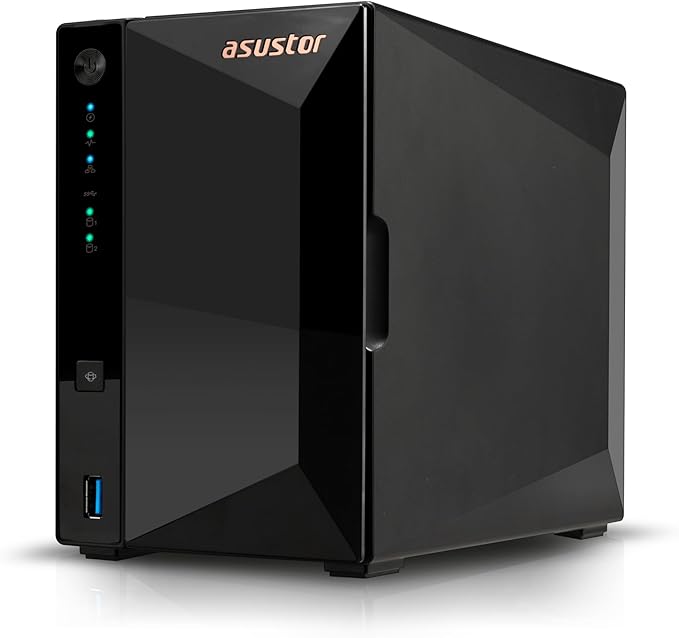 Asustor Drivestor 2 Pro Gen2 (AS3302T V2)
|
 TerraMaster F2-425
|
|
|---|---|---|
| CPU | Realtek RTD1619B Quad-Core | Intel Celeron N5095 |
| RAM | 2GB DDR4 | 4GB DDR4 |
| Drive Bays | 2x 3.5"/2.5" SATA | 2x 3.5"/2.5" SATA |
| Network | 1x 2.5GbE | 1x 2.5GbE |
| M.2 Slots | Not included | Not included |
| File System | EXT4, Btrfs | EXT4, Btrfs |
| Price (Scorptec) | $383 | $400 |
| Price (Mwave) | $383 | $400 (Scorptec) |
| Price (PLE) | $383 (Mwave) | $400 (Scorptec) |
Prices last verified: 1 March 2026. Always check retailer before purchasing.
The TerraMaster F2-425 at $499 (Scorptec, checked 18 August 2026) brings a significantly more powerful Intel Celeron N5095 processor compared to the Asustor's ARM-based Realtek chip. For basic file storage, the Realtek is perfectly adequate. For Plex transcoding, Docker containers, or running multiple apps simultaneously, the Celeron N5095 is in a different league entirely. The F2-425 supports Btrfs and EXT4 for internal volumes; its official specification does not list ZFS.
However, the Asustor Drivestor 2 Pro Gen2 is available at $389 from PLE, making it $70 cheaper. It is also stocked at Mwave ($439) and Scorptec ($439), giving Australian buyers more purchasing options and more competition-driven pricing. TerraMaster's availability at this price point is limited to Scorptec.
Hardware Comparison: Mid-Range (Under $1,200)
The mid-range is where TerraMaster makes its strongest case. The hardware-per-dollar argument is difficult to ignore.
Mid-Range 4-Bay NAS Comparison
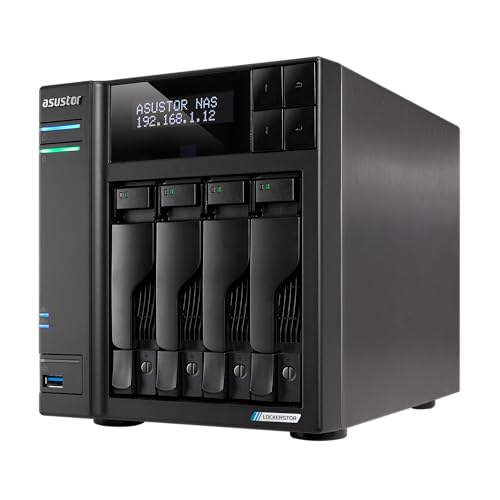 Asustor Lockerstor 4 Gen2+ (AS6704T v2)
|
 Asustor Nimbustor 4 Gen2 (AS5404T)
|
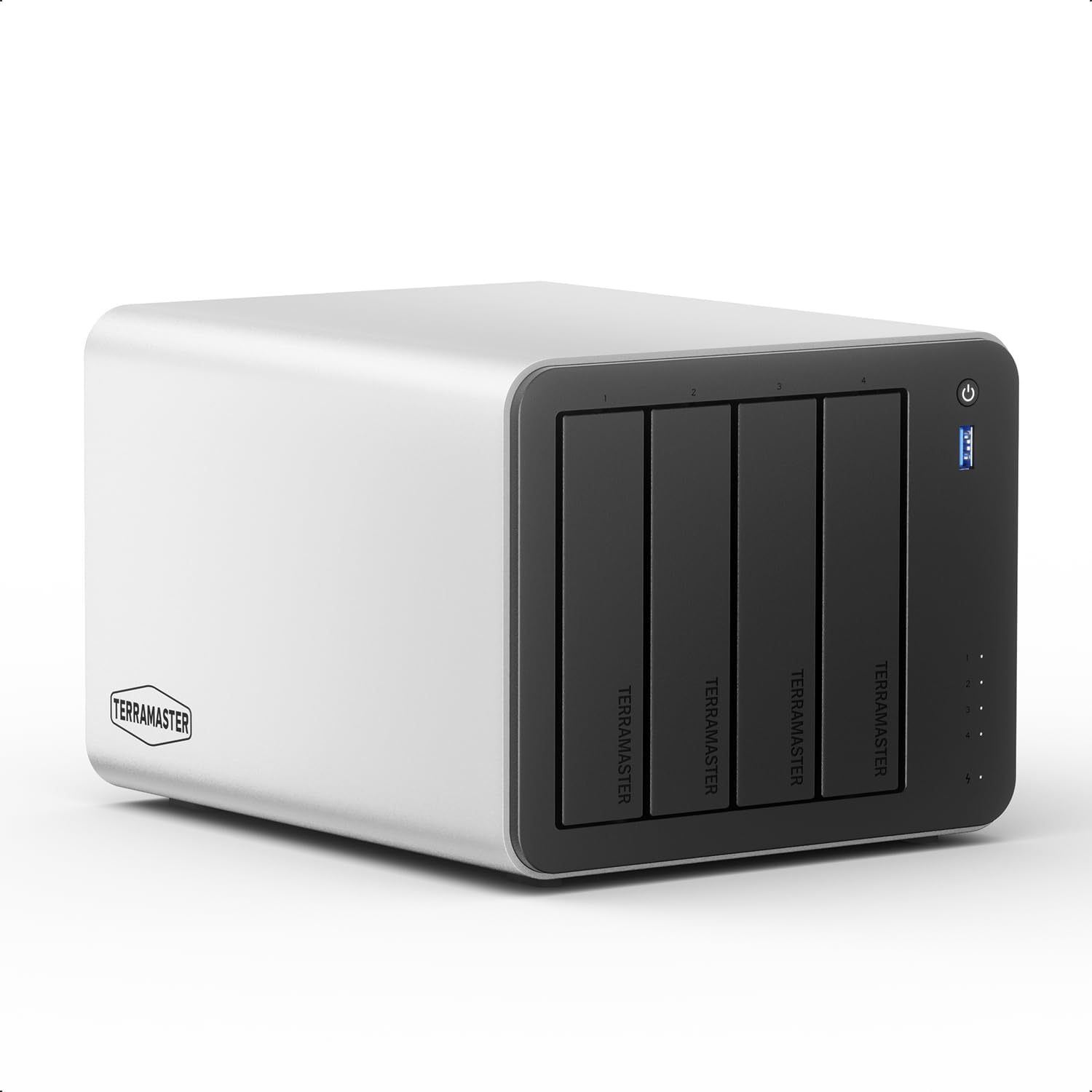 TerraMaster F4-425 Pro
|
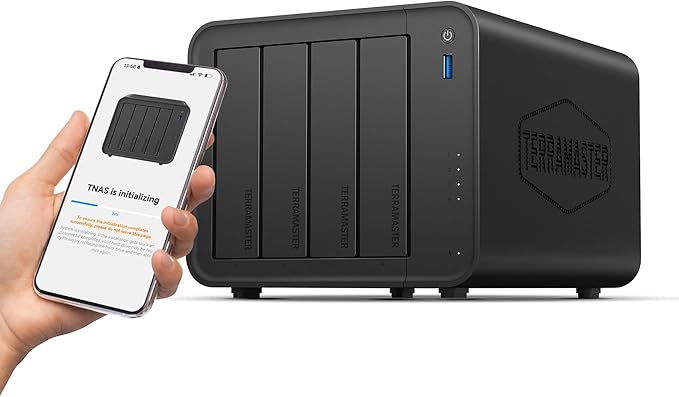 TerraMaster F4-425
|
|
|---|---|---|---|---|
| CPU | Intel Celeron N5105 | Intel Celeron N5105 | Intel Core i3-N305 | Intel Celeron N5095 |
| RAM | 4GB DDR4 | 4GB DDR4 | 32GB DDR5 | 4GB DDR4 |
| Drive Bays | 4x 3.5"/2.5" SATA | 4x 3.5"/2.5" SATA | 4x 3.5"/2.5" SATA | 4x 3.5"/2.5" SATA |
| Network | 2x 5GbE | 2x 2.5GbE | 2x 2.5GbE | 1x 2.5GbE |
| M.2 Slots | 4x NVMe | 4x NVMe | 2x NVMe | Not included |
| Price (Scorptec) | $1,199 (Scorptec) | $749 (Scorptec) | ~$1117 (Mwave) | $584 (Scorptec) |
| Price (Mwave) | $1,099 (Mwave) | $943 (Mwave) | ~$1117 (Mwave) | $584 (Scorptec) |
The TerraMaster F4-425 Pro is the standout in this segment. Scorptec currently lists the F4-425 Pro with an Intel N305 processor and 8GB of DDR5 RAM for $1,099. The closest Asustor equivalent, the Lockerstor 4 Gen3 (AS6804T) with a Ryzen V3C14 and 16GB RAM, costs $2,279 at Scorptec. That is a $1,180 gap for broadly comparable performance. If you need processing power for Docker workloads, virtualisation, or video editing workflows, the F4-425 Pro's hardware is hard to beat at this price.
The catch, as always with TerraMaster, is software. TOS is competent but not as polished as ADM, and the comparative after-sales performance of Encomtech Australia and Dicker Data is not established by the available evidence. If you are comfortable managing your NAS at a slightly more hands-on level, the TerraMaster's hardware advantage is compelling. If you want a smoother out-of-the-box experience, the Asustor Lockerstor 4 Gen2 (AS6704T) at $899 (Scorptec, checked 18 August 2026) delivers that with dual 2.5GbE, M.2 slots, and ADM's mature ecosystem.
Hardware Comparison: Performance (Over $1,200)
At the higher end, both brands offer compelling options, though they target different use cases.
Performance NAS Comparison
 Asustor Lockerstor 6 Gen2+ (AS6706T v2)
|
 Asustor Lockerstor 4 Gen3 (AS6804T)
|
 TerraMaster F6-424 Max
|
 TerraMaster F8 SSD Plus
|
|
|---|---|---|---|---|
| CPU | Intel Celeron N5105 | AMD Ryzen V3C14 | Intel Core i5-1235U | Intel i3-N305 |
| RAM | 8GB DDR4 | 16GB ECC DDR5 | 8GB DDR5 | 16GB DDR5 |
| Drive Bays | 6x 3.5"/2.5" | 4x 3.5"/2.5" | 6x 3.5"/2.5" | 8x M.2 SSD |
| Network | Dual 5GbE | 2x 5GbE, 2x 10GbE | 2x 10GbE | 1x 10GbE |
| Price (Scorptec) | $1,489 (Scorptec) | $2,279 (Scorptec) | $1124.99 (Mwave) | $1125 (OOS) |
| Price (Mwave) | $1,567 | $2,175 | $1124.99 (Mwave) | $1125 |
| Price (PLE) | $1,579 (PLE) | $1,999 (PLE) | $1124.99 (Mwave) | N/A |
The TerraMaster F6-424 Max packs a 10-core/12-thread Intel Core i5-1235U into a 6-bay NAS; TerraMaster now also lists the newer F6-425 Pro, so buyers should compare current availability and specifications. That processor runs laps around the Celeron N5105 in the Asustor Lockerstor 6 Gen2+ ($1,436-$1,579). The F6-424 Max has dual 10GbE, while the AS6706T V2 has dual 5GbE; neither is limited to 2.5GbE. The Asustor Lockerstor 4 Gen3 at $2,279 (Scorptec) offers 5GbE networking and the AMD Ryzen V3C14 with 16GB RAM, which is better balanced for high-throughput workflows.
The TerraMaster F8 SSD Plus is an interesting niche product: an 8-bay all-M.2-SSD NAS with one 10GbE port for $1,299-$1,300. It competes with the Asustor Flashstor line, where the Flashstor 12 Pro (FS6712X) starts at $999 (Scorptec) but with only 4GB RAM and the older Celeron N5105. For an all-flash NAS use case, both brands offer genuine options.
Australian Availability and Retail Support
This is one of the most important factors in this comparison, and it clearly favours Asustor. Australian retail availability directly affects your purchase options, pricing competition, and critically, your after-sales support experience.
Asustor Availability
Asustor is stocked by the three major Australian NAS retailers: Mwave (27 products listed), Scorptec (31 products listed), and PLE (14 products listed). The Drivestor, Lockerstor, Nimbustor, and Flashstor ranges are all represented, giving Australian buyers genuine choice across price points.
TerraMaster Availability
TerraMaster's Australian retail footprint is narrower. Scorptec carries 19 products (including drive enclosures) and Mwave lists 11 (also including enclosures). PLE does not appear to stock TerraMaster NAS units. Actual NAS availability is limited to roughly 7-8 models across both retailers. Several models, including the F4 SSD and F8 SSD Plus, are listed as out of stock at Scorptec.
For practical purposes, if you want a TerraMaster NAS in Australia today, Scorptec is your primary option. This lack of competition means less price pressure and fewer alternatives if your preferred retailer is out of stock or if you have a poor support experience. For more detail on where to buy NAS in Australia, see our retailer guide.
Warranty and After-Sales Support in Australia
Neither Asustor nor TerraMaster has a service centre in Australia. For an Australian Consumer Law remedy, the retailer is responsible to the customer; any internal distributor or vendor escalation process and its timing vary by retailer and case.
The key difference is in the strength of that chain. Asustor's distribution through Dicker Data, one of Australia's top-tier distributors with account managers in every state, gives the warranty process a defined escalation path. Dicker Data publicly documents its ASUSTOR relationship, national operations and returns contact. TerraMaster identifies Encomtech Australia Pty Ltd as its Australian distributor and TerraMaster Oceania office; Encomtech Australia describes itself as an importer and distributor established in 2001, operating from a single New South Wales address. The available information does not establish comparative after-sales support performance.
Australian Consumer Law note: ACL protections apply regardless of which brand you choose, as long as you purchase from an Australian retailer. The retailer is responsible for applicable ACL remedies and cannot require you to deal only with the manufacturer, although consumers may seek certain remedies from a manufacturer in some circumstances. Before buying, ask your retailer: "If this unit fails, what is your process? How long does a typical warranty claim take?" The answer tells you more about the value of buying from that store than the price on the website. For official ACL information, visit accc.gov.au.
One often-overlooked point: ACL remedies may include compensation for reasonably foreseeable loss caused by a consumer-guarantee failure; whether data loss is recoverable is fact-specific. Independent backups remain essential. This applies equally to Asustor and TerraMaster. Always maintain offsite backups following a 3-2-1 backup strategy regardless of which brand you choose.
Pros and Cons Summary
Asustor
Pros
- Wider Australian retail availability across Mwave, Scorptec, and PLE
- Stronger distribution chain through Dicker Data for warranty support
- ADM is a mature, stable operating system with a solid app ecosystem
- Good Docker and Plex support, 4 free surveillance camera licenses
- Backed by ASUS engineering and supply chain
- Competitive pricing at the entry level, especially at PLE
Cons
- Hardware specs trail TerraMaster at equivalent price points in the mid-range
- ADM still lags behind Synology DSM in first-party app depth
- No ZFS support on consumer models
- RAM is often limited at lower price points (1-2GB on Drivestor range)
- Some Gen3 models showing out-of-stock at retailers
TerraMaster
Pros
- Exceptional hardware value, especially the F4-425 Pro (N305 + 8GB DDR5 RAM for $1,099 at Scorptec)
- Strong Intel processors even on entry-level models
- Generous RAM allocations compared to competitors at the same price
- Hybrid bay models (F2-425 Plus, F4-425 Plus) offer HDD+SSD flexibility
Cons
- Limited Australian retail availability, primarily Scorptec
- Less proven warranty support
- TOS is less mature than ADM, with a smaller app ecosystem
- Mobile apps and community support are less developed
- Several models out of stock at Australian retailers
- No presence at PLE, limiting price competition
Which NAS Suits Which Buyer
Choose Asustor If
You want the safer, more predictable NAS experience. Asustor suits first-time NAS buyers who value software polish, straightforward setup, and confidence that Australian retail support will be there if something goes wrong. The Drivestor 2 Pro Gen2 at $439 (PLE) is a strong entry point for home users, while the Lockerstor 4 Gen2 at $775 (Scorptec) hits the sweet spot for home power users who want dual 2.5GbE and M.2 caching without breaking $800.
Asustor is also the better pick for Plex media servers and home surveillance setups, where ADM's native app support and the 4 free camera licenses provide immediate out-of-the-box value. If you are on NBN and want to set up remote access, ADM's EZ-Connect feature simplifies the process, which matters if your ISP uses CGNAT (common on NBN connections with Upload speed depends on the retail plan and access technology: NBN Co's Home Fast tier moved from 100/20 to 500/50 for eligible FTTP and HFC services, while some 100-class services retain lower upload limits.).
Choose TerraMaster If
You are technically confident, you prioritise hardware specs per dollar, and you are comfortable with a less polished software experience. Scorptec currently lists the F4-425 Pro with an Intel N305 and 8GB DDR5 at $1,099; it lists the Synology DS725+ at $949. If you are running Docker containers, VMs, or computationally heavy workloads, that hardware headroom is genuinely useful.
TerraMaster's current specifications list Btrfs and EXT4 for internal volumes; they do not list ZFS. Just be aware that ZFS is memory-hungry, so the generous RAM allocations on TerraMaster units are not just a spec sheet win; they are a practical necessity.
Consider Synology or QNAP Instead If
Neither Asustor nor TerraMaster matches Synology or QNAP for software depth, ecosystem maturity, or Australian support infrastructure. If your NAS is mission-critical for a small business, if you need enterprise-grade backup and replication features, or if you simply want the most trouble-free experience possible, Synology and QNAP remain the top-tier options. See our Synology vs QNAP comparison for that matchup, or our Synology vs Asustor and QNAP vs Asustor comparisons for how the budget brands stack up against the premium options.
Price Comparison: Key Models at Australian Retailers
Australian NAS prices can vary materially by retailer, product, promotion and market conditions; relevant differences include price, stock availability and after-sales support. Prices are snapshots and should be checked directly with retailers before purchase.
Asustor Key Prices


| Drivestor 2 Lite (AS1102TL) 2-Bay | $299 (Scorptec, PLE) |
|---|---|
| Drivestor 2 Gen2 (AS1202T) 2-Bay | $356 (Mwave) / $359 (Scorptec) |
| Drivestor 2 Pro Gen2 (AS3302T V2) 2-Bay | $439 (PLE, Mwave) / $399 (Scorptec) |
| Drivestor 4 Pro (AS3304T V2) 4-Bay | $599 (PLE) / $461 (Mwave) / $545 (Scorptec) |
| Nimbustor 4 Gen2 (AS5404T) 4-Bay | $749 (Scorptec) / $943 (Mwave) |
| Lockerstor 4 Gen2+ (AS6704T v2) 4-Bay | $1,199 (Scorptec) / $1,099 (Mwave) |
| Lockerstor 6 Gen2+ (AS6706T V2) 6-Bay | $1,579 (PLE) / $1,567 (Mwave) |
| Lockerstor 4 Gen3 (AS6804T) 4-Bay | $2,279 (Scorptec) / $1,999 (PLE) / $2,175 (Mwave) |
TerraMaster Key Prices
| F2-425 2-Bay | $459 (Scorptec) |
|---|---|
| F2-425 Plus 3+2 Bay Hybrid | $599 (Scorptec) |
| F4-425 4-Bay | $659 (Scorptec) |
| F4-424 (N95, 8GB) 4-Bay | $760 (Mwave) |
| F4-425 Plus 3+4 Bay Hybrid | $999 (Scorptec) |
| F4-425 Pro (N305, 8GB) 4-Bay | $1,099 (Scorptec) |
| F4-424 Max (i5, 8GB) 4-Bay | $1,500 (Mwave) |
| F6-424 Max (i5, 8GB) 6-Bay | $1,699 (Scorptec) / $1,700 (Mwave) |
Buying tip: For business or education purchases, always request a formal quote rather than buying at the listed price. Any discount offered can vary by reseller, product, quantity, promotion and purchaser eligibility.
Networking and NBN Considerations
Both brands offer 2.5GbE as standard on mid-range and above models, which is adequate for most Australian home and small office networks. If your network is still running Gigabit Ethernet (1GbE), even the fastest NAS will be bottlenecked at roughly 110-115 MB/s. Upgrading to a 2.5GbE switch is the single best performance upgrade you can make alongside a NAS purchase.
For remote access over NBN, both Asustor's EZ-Connect and TerraMaster's TNAS.online offer relay services that work around CGNAT, which is common on Australian NBN connections. Upload speed varies by access technology and retail plan; current NBN wholesale Home Fast tiers provide up to 50 Mbps on eligible FTTP/HFC and up to 20 Mbps on FTTN/FTTC/FTTB. If you need to regularly sync large files remotely, consider whether your NBN plan's upload speed is sufficient, or look into a VPN-based remote access setup for better security regardless of which brand you choose.
The Verdict
Asustor and TerraMaster occupy similar market positions as alternatives to Synology and QNAP, but they serve different types of buyers. Asustor is the more rounded product: better software, wider Australian availability, a documented Australian distribution relationship through Dicker Data, and competitive pricing at the entry level. TerraMaster is the hardware value play: more powerful processors, more RAM, and lower prices at the mid-range and above.
For most Australian buyers, particularly those buying their first or second NAS, Asustor is the safer choice. The combination of ADM's mature ecosystem, Dicker Data's distribution, and availability across three major retailers provides a level of confidence that TerraMaster cannot yet match in this market.
For technically confident buyers who want maximum hardware per dollar and are comfortable with a less polished software experience, TerraMaster's F4-425 Pro at $1,099 at Scorptec is the most compelling NAS value in Australia right now. Just go in with eyes open about the thinner support chain and plan your backup strategy accordingly.
Our RAID Calculator shows usable capacity for both brands' drive configurations side-by-side, and our NAS Sizing Wizard can help you confirm which model fits your actual storage needs.
Once you have chosen your NAS, get a second opinion on the full build. Drives, RAID type, network setup, and backup strategy. Before committing. $149 AUD, delivered within 3 business days.
See also: our complete Asustor NAS Australia guide.
Is Asustor or TerraMaster better for a first-time NAS buyer in Australia?
Asustor is the better choice for first-time buyers. ADM is more intuitive than TOS, the setup process is more straightforward, and Asustor's wider retail availability in Australia (Mwave, Scorptec, PLE) gives you more options for purchase and support. The Drivestor 2 Pro Gen2 at $389 from PLE is a strong entry point. TerraMaster's hardware advantage matters less if you are still learning how NAS works.
Can I run Plex on both Asustor and TerraMaster NAS?
Yes, both support Plex Media Server. Asustor's implementation through ADM is more polished, with Plex available directly from the app store. TerraMaster also supports Plex through Docker or direct installation on TOS 6. For Plex transcoding performance, TerraMaster's Intel processors with Quick Sync (like the Celeron N5095 and Core i3-N305) handle hardware transcoding well, as do Asustor's Celeron N5105 models. Both brands will struggle with transcoding on their ARM-based entry models.
Does TerraMaster have good warranty support in Australia?
TerraMaster is distributed in Australia by Encomtech Australia. Any retailer's internal escalation route and comparative claim performance should be confirmed with that retailer. Australian Consumer Law protections apply regardless, so the retailer remains responsible for applicable ACL remedies, although consumers may also have limited rights against the manufacturer in some circumstances. Buy from a reputable Australian retailer and have the "what if it fails" conversation before purchasing.
Is the TerraMaster F4-425 Pro worth it over an Asustor Lockerstor 4 Gen2?
It depends on your priorities. Scorptec currently lists the TerraMaster F4-425 Pro with an Intel N305 and 8GB DDR5 RAM at $1,099, and the Asustor Lockerstor 4 Gen2 with a Celeron N5105 and 4GB DDR4 at $899. If you are running Docker containers, VMs, or compute-heavy workloads, the TerraMaster's hardware headroom is genuinely useful and represents exceptional value. If you want a more polished software experience, better mobile apps, and wider Australian retail availability, the Asustor delivers that at a lower price. The current $200 price difference buys very different things depending on what you value.
Does TerraMaster support ZFS? Does Asustor?
TerraMaster's official specifications for the models compared here list Btrfs and EXT4 for internal drives, not ZFS. Asustor consumer models support EXT4 and Btrfs. ZFS offers self-healing capabilities, copy-on-write protection, and efficient snapshots. Asustor does not offer ZFS on its consumer models; ADM supports EXT4 and Btrfs. Neither brand's official specifications for the consumer models compared here list ZFS for internal volumes. Keep in mind that ZFS is memory-hungry, so TerraMaster's generous RAM allocations are a practical necessity, not just a marketing spec.
Where can I buy Asustor and TerraMaster NAS in Australia?
Asustor is available at Mwave, Scorptec, and PLE, with 27-31 products listed across these retailers. TerraMaster has a narrower footprint, primarily available at Scorptec (19 listings including enclosures) and Mwave (11 listings). PLE does not appear to stock TerraMaster NAS units. For the best pricing, compare across retailers. Asustor pricing varies notably between stores, with PLE often offering the lowest prices on popular models like the Drivestor 2 Pro Gen2 ($389 vs $439 at Scorptec and Mwave).
Should I just buy a Synology or QNAP instead of either brand?
If your budget allows it and you value software maturity, ecosystem depth, and the strongest Australian support infrastructure, then yes, Synology and QNAP remain the top-tier choices. A Synology DS425+ at $1,029 (Mwave) or $999 (PLE) offers DSM's industry-leading software with a proven Australian support chain through BlueChip distribution. However, you will get less hardware per dollar compared to both Asustor and TerraMaster. The choice depends on whether you value software polish and support certainty over raw hardware value. See our Synology vs QNAP, Synology vs Asustor, and Synology vs TerraMaster comparisons for detailed breakdowns.
Still deciding which NAS brand suits your needs? Our comprehensive Australian NAS guide compares all major brands with real AU pricing.