TrueNAS is the leading open-source, ZFS-based NAS operating system. Powerful, free, and fundamentally different from consumer NAS brands like Synology and QNAP. Built by iXsystems on top of FreeBSD (CORE) and Debian Linux (SCALE), TrueNAS is used globally in homes, small businesses, and enterprises. For Australian buyers, TrueNAS offers exceptional storage capability and data integrity, but the buying experience, support model, and hardware path differ significantly from walking into Scorptec or PLE and picking up a Synology off the shelf. This guide covers everything Australian users need to know before choosing TrueNAS as their storage platform.
In short: TrueNAS is a free, open-source NAS operating system based on ZFS. Widely regarded as the most robust filesystem for data integrity. It runs on standard x86 hardware or purpose-built TrueNAS Mini appliances. There is no official Australian distributor or retail presence; hardware appliances are purchased direct from iXsystems (US) or you build/repurpose your own hardware. TrueNAS suits technically confident users who want maximum control, ZFS data protection, and no ongoing software licence fees. But it requires more hands-on setup and maintenance than Synology or QNAP.
What Is TrueNAS? The Platform Explained
TrueNAS is a storage operating system developed by iXsystems, an American company headquartered in San Jose, California. The platform has been under active development since 2005 (originally as FreeNAS) and is one of the most widely deployed open-source storage solutions in the world. In 2020, iXsystems unified its branding: the free community edition became TrueNAS CORE (FreeBSD-based) and later TrueNAS SCALE (Linux-based), while the commercial enterprise product is TrueNAS Enterprise.
The defining feature of TrueNAS is ZFS. The Zettabyte File System. ZFS provides copy-on-write data protection, built-in checksumming (every block of data is verified for corruption on every read), snapshots, replication, native encryption, and software RAID (called RAIDZ). For users who prioritise data integrity above all else, ZFS is widely considered the gold standard. It is the reason most TrueNAS users choose the platform over alternatives.
TrueNAS CORE vs TrueNAS SCALE
iXsystems maintains two editions of TrueNAS for home and small business use:
- TrueNAS CORE: The original FreeBSD-based release. Mature, stable, and proven over nearly two decades. Supports FreeBSD jails for running services. CORE is now in maintenance mode. It still receives security updates, but new feature development has shifted to SCALE.
- TrueNAS SCALE: The newer Linux-based release. Supports Docker containers and Kubernetes apps natively, making it far more flexible for running third-party applications alongside storage. SCALE also supports Linux-native features like KVM virtualisation. For new deployments in 2026, SCALE is the recommended edition.
Both editions use the same web-based management interface, support the same ZFS features, and are completely free to download and install. The key difference is the underlying OS: FreeBSD (CORE) vs Debian Linux (SCALE). For most Australian home and small business users starting fresh, TrueNAS SCALE is the clear path forward.
TrueNAS Enterprise
TrueNAS Enterprise is the commercial, supported tier. Sold as combined hardware and software appliances directly by iXsystems. Enterprise systems include high-availability (dual-controller) configurations, proactive support, and guaranteed SLAs. These are deployed in data centres, media production, and large organisations globally. Enterprise pricing starts well above $10,000 USD and scales into six figures. For Australian enterprise buyers, iXsystems sells direct with international shipping. There is no local distribution channel.
How to Get TrueNAS in Australia
This is where TrueNAS diverges sharply from Synology, QNAP, and Asustor. Those brands are sold through established Australian distribution channels. BlueChip, Dicker Data, and others. And stocked by local retailers like Scorptec, PLE, and Mwave. TrueNAS has no official Australian distributor, no local retail presence, and no walk-in purchase option. There are three paths to running TrueNAS in Australia:
Option 1: Build Your Own Hardware
The most common path for Australian TrueNAS users. TrueNAS CORE and SCALE are free downloads from truenas.com. You install the OS on any compatible x86 hardware. A repurposed desktop PC, a custom-built server, or rackmount hardware sourced from Australian retailers.
This approach offers maximum flexibility and the best price-to-performance ratio. A capable TrueNAS box can be built from components available at Scorptec, PLE, or Mwave for anywhere from $500 to $3,000+ depending on the CPU, RAM, and drive configuration. The trade-off is that you are responsible for hardware compatibility, assembly, configuration, and ongoing maintenance. There is no vendor to call if something goes wrong with your hardware. IXsystems supports their software, not your custom-built box.
Option 2: Buy a TrueNAS Mini Appliance (Direct from iXsystems)
iXsystems sells purpose-built TrueNAS Mini appliances. Compact, pre-configured NAS hardware with TrueNAS pre-installed. These are the closest equivalent to buying a Synology or QNAP off the shelf, except they ship from the US. Models include the TrueNAS Mini R (4-bay) and TrueNAS Mini X+ (5-bay), with pricing starting around $700-$1,500 USD before international shipping and import duties.
For Australian buyers, this means:
- Ordering direct from truenas.com or the iXsystems online store
- International shipping costs (typically $80-$200 USD depending on speed)
- Potential GST and import duty on arrival (goods over $1,000 AUD attract GST at the border; goods under $1,000 may still attract GST collected at checkout)
- Warranty claims go through iXsystems in the US. There is no local warranty service
The TrueNAS Mini is an excellent product for users who want a turnkey ZFS appliance without building their own hardware. But the lack of local distribution means you're accepting US-based support and international shipping timelines.
Option 3: Repurpose Enterprise or Second-Hand Hardware
A popular option in the Australian TrueNAS community: buying decommissioned enterprise servers (Dell PowerEdge, HPE ProLiant, Lenovo ThinkSystem) from ex-lease sellers and installing TrueNAS. Platforms like eBay AU, server resellers, and IT asset disposal companies regularly sell capable hardware for a fraction of its original cost. A Dell R730 with 64GB RAM, dual Xeon CPUs, and 8+ drive bays can often be found for $500-$1,000 AUD.
The caveats: enterprise hardware is power-hungry (often drawing 150-300W+ idle), noisy (designed for data centre environments), and heavy. It suits garage setups, dedicated server rooms, or home labs. Not a living room shelf. But for raw ZFS performance per dollar, nothing beats repurposed enterprise gear.
Australian Consumer Law note: When purchasing TrueNAS Mini hardware direct from iXsystems (a US company), standard Australian Consumer Law protections may not apply in the same way as buying from an Australian retailer. ACL rights are enforceable against the seller. And if the seller is based overseas, pursuing a warranty claim can be significantly more complex and costly. If you purchase TrueNAS hardware through an Australian-based reseller on eBay or marketplace, ACL protections apply to that Australian seller. Always consider the support implications before buying. For official guidance on your consumer rights, visit accc.gov.au.
TrueNAS Hardware Requirements for Australian Builds
ZFS is more demanding on hardware than the operating systems used by Synology (DSM), QNAP (QTS), or Asustor (ADM). The most critical resource is RAM. ZFS uses system memory aggressively for its Adaptive Replacement Cache (ARC), and performance degrades significantly if RAM is insufficient. Here are practical minimum and recommended specs for Australian TrueNAS builds:
| Minimum RAM | 8 GB (absolute floor for basic file serving) |
|---|---|
| Recommended RAM | 16 GB for home use; 32-64 GB for SMB/virtualisation |
| RAM Rule of Thumb | 1 GB per TB of raw storage is a guideline, not a hard rule. 16 GB is sufficient for most home deployments under 40 TB. |
| CPU | Any 64-bit x86 CPU. Intel Celeron/Pentium for basic file serving; Intel Core i3/i5 or Xeon for heavier workloads, VMs, or containers. |
| Boot Device | 16 GB+ USB, SSD, or mirrored SSDs. Boot drive is separate from storage drives. |
| ECC RAM | Recommended (not required). ECC prevents silent memory corruption. Aligns with ZFS's data integrity philosophy. Available on Xeon and AMD ECC-capable platforms. |
| HBA (Host Bus Adapter) | Recommended for builds with 4+ drives. LSI/Broadcom SAS HBAs in IT mode (e.g., 9207-8i, 9300-8i) are the community standard. Avoid hardware RAID controllers. ZFS manages its own RAID. |
| Network | 1GbE minimum; 2.5GbE or 10GbE recommended for multi-user or media-heavy environments. |
All of these components are available from Australian retailers. A practical 4-bay TrueNAS home server built with an Intel Core i3, 16 GB ECC RAM, a quality case like the Fractal Design Node 304, and a reliable PSU can be assembled for approximately $600-$900 AUD before drives. Adding four 8 TB NAS-class drives (e.g., Synology HAT3320-8T at $499 each from Scorptec, or equivalent Seagate IronWolf / WD Red Plus models) brings the total to roughly $2,600-$2,900 AUD. Comparable to a mid-range Synology DS925+ ($995-$1,029 at Scorptec/Mwave) plus the same drives.
TrueNAS vs Synology, QNAP, and Asustor: Where Does It Fit?
TrueNAS competes in the same storage space as Synology, QNAP, and Asustor but serves a fundamentally different audience. Understanding these differences is essential before committing to a platform.
TrueNAS vs Consumer NAS Brands. Key Differences
| TrueNAS (CORE/SCALE) | Synology (DSM) | QNAP (QTS) | Asustor (ADM) | |
|---|---|---|---|---|
| Software Cost | Free (open source) | Included with hardware | Included with hardware | Included with hardware |
| Filesystem | ZFS (best-in-class integrity) | Btrfs or ext4 | ext4 (ZFS on some models) | Btrfs or ext4 |
| Hardware | BYO or TrueNAS Mini (US import) | Synology appliances (AU retail) | QNAP appliances (AU retail) | Asustor appliances (AU retail) |
| AU Retail Availability | None. DIY or US direct | Excellent. All major AU retailers | Excellent. All major AU retailers | Good. Mwave, Scorptec, PLE |
| Setup Complexity | High. Requires hardware knowledge | Low. Plug and play | Low to moderate | Low to moderate |
| App Ecosystem | SCALE: Docker/Kubernetes. CORE: Jails | Synology Package Center (polished) | QNAP App Center (extensive) | Asustor App Central |
| Mobile Apps | Third-party or web UI | Excellent (DS File, Photos, etc.) | Good (Qfile, QuMagie, etc.) | Good (AiData, AiFoto, etc.) |
| Warranty/Support | Community forums; paid support for Enterprise | 3-5 yr via AU retailer | 3-5 yr via AU retailer | 3-5 yr via AU retailer |
| Best For | Technical users, data integrity, self-hosting | Families, small business, photo backup | Power users, virtualisation, multimedia | Budget-conscious, media streaming |
The honest assessment: if you want a storage device that works out of the box with minimal technical knowledge, polished mobile apps, and local Australian warranty support, TrueNAS is not the right choice. A Synology DS225+ (from $585 at Mwave) or QNAP TS-464 (from $989 at Scorptec) will serve you better. But if you want the most robust data protection available, full control over your hardware, no vendor lock-in, and zero ongoing licence fees. And you're comfortable in a terminal. TrueNAS is hard to beat.
TrueNAS and the Australian NBN: What to Know
TrueNAS is primarily a local network storage platform. Its performance is determined by your LAN, not your internet connection. However, many Australian TrueNAS users want remote access (to reach their NAS from outside the home) or cloud replication (syncing data offsite). This is where NBN limitations come into play.
Upload speeds are the bottleneck. A typical NBN 100/20 plan delivers around 17-20 Mbps upload in practice. NBN 50/20 is similar on the upload side. Even NBN 250 and 1000 plans are often capped at 25-50 Mbps upload unless you specifically pay for a symmetrical or higher-upload plan. For a TrueNAS box replicating data offsite (e.g., to a remote TrueNAS at a family member's house or to a cloud target like Backblaze B2), these upload speeds mean:
- Initial sync of 10 TB of data at 20 Mbps upload ≈ 46+ days of continuous transfer
- Incremental daily syncs of 10-50 GB are manageable (1-5 hours)
- ZFS replication is efficient. Only changed blocks are sent after the initial sync. Which makes it well-suited to bandwidth-constrained connections
CGNAT is a real problem for remote access. Many NBN RSPs (particularly on mobile-derived or fixed wireless connections, and some FTTP/FTTC plans) use Carrier-Grade NAT (CGNAT), which means your home connection doesn't have a public IP address. Without a public IP, you cannot directly access your TrueNAS remotely via port forwarding or a VPN server running on your network. Solutions include requesting a static or dynamic public IP from your RSP (some charge $5-$10/month extra), using a VPN tunnel service like Tailscale or WireGuard with a relay, or using Cloudflare Tunnel. Synology and QNAP handle this more seamlessly with their QuickConnect and myQNAPcloud relay services respectively. TrueNAS requires manual configuration.
Who Should Choose TrueNAS in Australia?
TrueNAS suits a specific profile of Australian user. Being honest about who it serves well. And who it doesn't. Is more valuable than pretending it's for everyone.
TrueNAS Is a Strong Fit For:
- IT professionals and home lab enthusiasts who want full control over their storage stack and are comfortable with command-line administration, ZFS pool management, and Docker/Kubernetes application deployment.
- Data integrity-focused users. Photographers, videographers, researchers, and archivists who cannot tolerate silent data corruption. ZFS's checksumming and scrubbing is unmatched in the consumer NAS space.
- Small businesses with in-house IT capability who want enterprise-grade storage without enterprise-grade licensing costs. TrueNAS SCALE with SMB shares, iSCSI targets, and ZFS replication can replace commercial SAN/NAS appliances costing tens of thousands.
- Self-hosting enthusiasts running services like Plex, Nextcloud, Home Assistant, or Immich who want a unified platform for storage and applications.
- Budget-conscious builders who have time and technical skill to trade for cost savings. Repurposing hardware or building from components.
TrueNAS Is Not Ideal For:
- First-time NAS buyers who want a plug-and-play experience. Synology's DSM or QNAP's QTS are dramatically easier to set up and maintain.
- Families who primarily want photo/video backup with mobile apps. Synology Photos and QNAP QuMagie are polished, purpose-built solutions. TrueNAS has no equivalent first-party app. You'd need to deploy Immich or PhotoPrism via Docker, which requires additional configuration.
- Users who need local Australian warranty support. There is no local warranty path for TrueNAS hardware. If your TrueNAS Mini fails, you're dealing with iXsystems in the US. If your DIY build fails, you're troubleshooting the individual components yourself.
- Businesses without dedicated IT staff. TrueNAS requires ongoing maintenance. ZFS pool scrubs, drive replacements, OS updates, and container management. Without someone to manage it, a Synology or QNAP with a simpler update process is a safer choice.
TrueNAS Pros and Cons for Australian Buyers
Pros
- ZFS provides best-in-class data integrity with checksumming, scrubbing, and copy-on-write protection
- Completely free. No software licence fees, no subscription costs, no per-camera surveillance charges
- No vendor lock-in. Your data sits on standard hardware with an open filesystem
- TrueNAS SCALE supports Docker containers and Kubernetes for flexible application deployment
- Full control over hardware selection. Choose the exact CPU, RAM, network, and drive configuration you want
- ZFS replication is highly efficient for offsite backup, even over constrained Australian NBN upload connections
- Active global community with excellent documentation and forums
- Scales from a 2-drive home server to petabyte-class enterprise storage on the same platform
Cons
- No Australian retail presence. Hardware is DIY, US import, or second-hand
- No local warranty or support infrastructure in Australia
- Requires genuine technical knowledge to set up, configure, and maintain
- No polished mobile apps for photo backup, file access, or media streaming (relies on third-party solutions)
- ZFS demands more RAM than competing platforms. 16 GB minimum recommended vs 2-4 GB on consumer NAS
- Remote access requires manual VPN or tunnel configuration (no equivalent to Synology QuickConnect)
- Hardware compatibility research is on you. No guaranteed 'it just works' appliance experience (unless buying TrueNAS Mini)
- Community support only for free editions. No phone or email support from iXsystems unless on Enterprise
Cost Comparison: TrueNAS DIY vs Synology/QNAP in Australia
One of TrueNAS's strongest arguments is cost. But only when you factor in the total picture. Here's a realistic comparison for a 4-bay, 32 TB usable storage deployment in Australia (as of March 2026):
4-Bay 32 TB NAS Cost Comparison (AUD, March 2026)
| TrueNAS DIY Build |
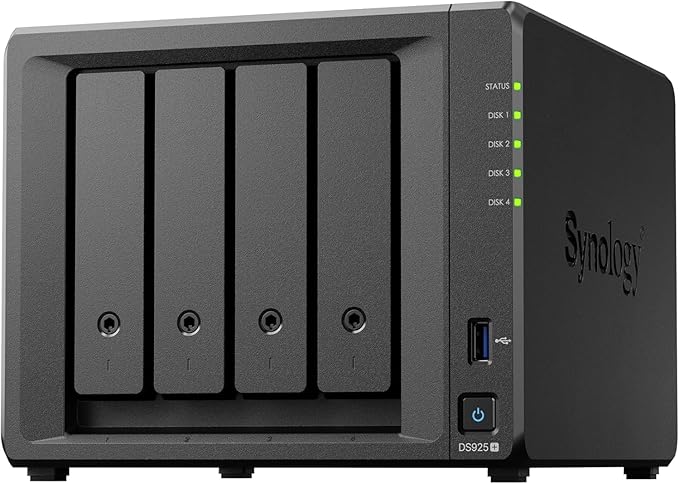 Synology DS925+
|
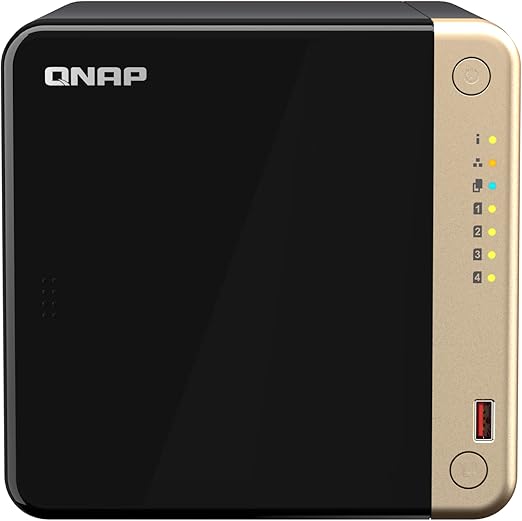 QNAP TS-464
|
|
|---|---|---|---|
| NAS Unit / Components | ~$700-$900 (case, PSU, motherboard, CPU, 16GB ECC RAM, boot SSD) | $995-$1,029 (Scorptec/Mwave) | $989-$1,099 (Scorptec/PLE) |
| 4× 8 TB NAS Drives | ~$1,200-$2,000 (Seagate IronWolf or Synology HAT3320-8T at $499 ea from Scorptec) | Same. $1,200-$2,000 | Same. $1,200-$2,000 |
| Software Licence | $0 (free) | $0 (included) | $0 (included) |
| Total Estimated Cost | $1,900-$2,900 | $2,200-$3,000 | $2,200-$3,100 |
| Ongoing Costs | $0 (no subscription fees) | Surveillance Station cameras: $99-$349/licence pack if needed | Surveillance: similar licence packs |
| Setup Time | 2-6 hours (build + install + configure) | 30-60 minutes | 30-60 minutes |
| AU Warranty | Individual component warranties only | 3 years via AU retailer (extendable to 5) | 3 years via AU retailer |
The hardware cost for a TrueNAS DIY build is roughly comparable to. Or slightly cheaper than. A consumer NAS appliance when you're building a mid-range system. The savings become more significant at scale: a TrueNAS box with 8+ bays, 64 GB RAM, and 10GbE networking can be built for substantially less than equivalent Synology XS+ or QNAP TVS-h series hardware. The cost advantage diminishes at the entry level where consumer NAS appliances are already aggressively priced.
The Support Question: What Happens When Things Go Wrong
This is the most important consideration for Australian TrueNAS users, and one that's often glossed over in enthusiast communities. When a Synology or QNAP fails in Australia, the process is clear: contact your retailer, they engage their distributor (BlueChip, Dicker Data), the distributor escalates to the vendor in Taiwan, and a replacement flows back down the chain. It typically takes 2-3 weeks, but the path is well-established and legally protected under Australian Consumer Law.
With TrueNAS, the support picture depends entirely on your hardware path:
- DIY build: You troubleshoot individual components yourself. Each component (motherboard, PSU, RAM, drives) has its own manufacturer warranty via the Australian retailer you bought it from. There's no single point of contact for a 'NAS failure.' The software is community-supported via the TrueNAS forums. Which are excellent, but there's no guaranteed response time.
- TrueNAS Mini (US import): Warranty claims go through iXsystems in the US. Shipping a failed unit internationally for warranty service is expensive and slow. iXsystems does offer good support, but the tyranny of distance adds weeks to any resolution.
- TrueNAS Enterprise: Includes formal support contracts with defined SLAs. iXsystems provides direct support including remote diagnostics and replacement part shipping. This is the only TrueNAS tier with professional support, and it's priced accordingly.
The practical implication: if you run TrueNAS in Australia, you need to be your own support team for hardware issues. This is entirely manageable for experienced builders. But it's a genuine disadvantage compared to the established warranty chain that Synology, QNAP, and Asustor offer through Australian retailers. As the Need to Know IT team consistently advises: a NAS is not a backup. Plan for failure, plan for a 2-3 week resolution window, and maintain offsite copies of critical data regardless of which platform you choose.
Key TrueNAS Features for Australian Use Cases
ZFS Snapshots and Replication
ZFS snapshots are instantaneous, space-efficient point-in-time copies of your data. Combined with ZFS replication, you can send incremental snapshots to a remote TrueNAS system (at a friend's house, a family member's place, or a remote office) over the internet. Because only changed blocks are transferred, daily replication of a multi-terabyte pool can often complete within the upload constraints of an NBN 100/20 or 250/25 connection. This is one of TrueNAS's strongest features for Australian users who want a genuine offsite backup without relying on cloud storage subscriptions.
SMB, NFS, and iSCSI File Sharing
TrueNAS supports all major network file sharing protocols natively. SMB (for Windows and macOS clients), NFS (for Linux clients), and iSCSI (for block-level storage targets used in virtualisation) are all configured through the web interface. For a mixed Australian household or office with Windows PCs, MacBooks, and Linux machines, TrueNAS provides seamless cross-platform file access.
Docker and Application Hosting (SCALE)
TrueNAS SCALE's Linux foundation enables native Docker container support. This means you can run applications like Plex, Jellyfin, Nextcloud, Immich (a self-hosted Google Photos alternative), Home Assistant, Pi-hole, and hundreds of other containerised services directly on your TrueNAS box. The TrueNAS SCALE app catalogue provides a curated list of one-click deployments, or you can deploy any Docker image manually. This makes SCALE a genuine home server platform, not just a file server.
Cloud Backup Integration
TrueNAS supports cloud sync tasks to major providers including Backblaze B2, Amazon S3, Google Cloud Storage, and Wasabi. For Australian users following a 3-2-1 backup strategy (3 copies, 2 media types, 1 offsite), cloud sync from TrueNAS provides the offsite component. Backblaze B2 is particularly popular in the Australian TrueNAS community due to its straightforward pricing ($6 USD/TB/month with free egress up to 3× stored data). Be mindful of NBN upload constraints when planning initial cloud sync. Consider seeding large datasets via a shipped hard drive if your provider supports it.
Getting Started: Recommended Australian Build Configurations
These are practical starting points for Australians building their first TrueNAS system. All components are available from local retailers (Scorptec, PLE, Mwave, Centre Com). Prices are approximate as of March 2026 and will vary.
Budget Home NAS (2-4 Bays)

| CPU | Intel N100 or N305 mini-ITX motherboard (integrated CPU) |
|---|---|
| RAM | 16 GB DDR4/DDR5 (ECC if motherboard supports it) |
| Boot Device | 16-32 GB USB drive or small SATA SSD |
| Case | Fractal Design Node 304 or Jonsbo N2 (mini-ITX with 4+ HDD bays) |
| Network | Onboard 2.5GbE (common on N100/N305 boards) |
| Drives | 2-4× NAS-class HDDs (IronWolf, WD Red Plus, or Synology HAT3300 series) |
| Estimated Component Cost (excl. drives) | ~$400-$600 AUD |
| Use Case | Home file server, Plex media, basic Docker apps, personal backup |
Mid-Range Home / Small Office NAS (4-8 Bays)
| CPU | Intel Core i3-12100/13100 or AMD Ryzen 5 5600G |
|---|---|
| RAM | 32 GB DDR4 ECC (if using Xeon or ECC-capable platform) |
| Boot Device | Mirrored 2× SATA SSDs (for redundancy) |
| HBA | LSI 9207-8i or 9300-8i in IT mode (for 4+ SATA drives) |
| Case | Fractal Design Define 7 (supports 6+ HDDs) or Silverstone CS380 |
| Network | Onboard 1GbE + Intel X540-T2 10GbE PCIe card (~$100-$150 second-hand) |
| Drives | 4-8× NAS-class HDDs |
| Estimated Component Cost (excl. drives) | ~$700-$1,200 AUD |
| Use Case | SMB file server, multi-user access, virtualisation storage, extensive Docker/Kubernetes apps |
TrueNAS Community and Resources for Australians
While there's no official TrueNAS user group in Australia, the global community is active and welcoming:
- TrueNAS Community Forums (truenas.com/community). The primary support channel for free-tier users. Questions typically receive responses within hours. The forum has a dedicated hardware recommendations section that's invaluable for build planning.
- Reddit r/truenas. Active community with build advice, troubleshooting, and configuration guides. Skews toward experienced users.
- Whirlpool Forums. Australia's largest tech forum has active NAS and home server threads where local TrueNAS users share their builds, supplier recommendations, and experience with Australian internet constraints.
- YouTube. Channels like Lawrence Systems, SpaceRex, and Tom Lawrence provide detailed TrueNAS tutorials covering everything from first-time setup to advanced ZFS configuration.
Use our free ZFS vDev Calculator to plan your ZFS pool layout.
Related reading: our NAS buyer's guide and our Synology vs QNAP comparison.
Can I buy TrueNAS hardware from an Australian retailer?
Not directly. iXsystems (the company behind TrueNAS) does not have an Australian distributor or retail presence. TrueNAS Mini appliances are purchased from iXsystems in the US and shipped internationally. Alternatively, you can build your own TrueNAS system using components from Australian retailers like Scorptec, PLE, or Mwave. The TrueNAS software itself is a free download. Occasionally, Australian sellers on eBay or marketplace platforms sell pre-built TrueNAS systems, but these are not official iXsystems products.
Is TrueNAS really free? What's the catch?
TrueNAS CORE and TrueNAS SCALE are genuinely free with no licence fees, subscription costs, or feature restrictions. You download the ISO, install it on your hardware, and use every feature. Including ZFS, snapshots, replication, SMB/NFS/iSCSI, Docker (SCALE), and the full web interface. At no cost. iXsystems monetises through TrueNAS Enterprise hardware and support contracts, not through the free software. There is no catch, but there is also no phone support or SLA. You rely on community forums for assistance.
Do I need ECC RAM for TrueNAS?
ECC RAM is recommended but not required. ZFS co-creator Matt Ahrens has stated that ZFS does not need ECC more than any other filesystem. But ECC does prevent silent memory corruption that can affect any system. Given that TrueNAS is typically chosen specifically for data integrity, using ECC RAM aligns with that philosophy. If your budget or motherboard doesn't support ECC, non-ECC RAM works fine. Just don't let the ECC debate stop you from using TrueNAS. 16 GB of non-ECC DDR4 is dramatically better than no NAS at all.
How does TrueNAS handle remote access on Australian NBN connections?
TrueNAS does not include a built-in remote relay service like Synology's QuickConnect or QNAP's myQNAPcloud. For remote access, you need to configure either port forwarding (requires a public IP. Check if your NBN RSP uses CGNAT), a VPN server (WireGuard or OpenVPN), or a tunnel service like Tailscale or Cloudflare Tunnel. CGNAT is common on some NBN connections and blocks direct inbound access. Contact your RSP to request a public IP if needed (some charge $5-$10/month). This is more complex than consumer NAS relay services but offers more secure and performant remote access once configured.
Can I run Plex, Jellyfin, or other media apps on TrueNAS?
Yes. On TrueNAS SCALE, Plex and Jellyfin are available as Docker containers. Either through the built-in app catalogue or manually deployed. Hardware transcoding (using Intel Quick Sync on supported CPUs) works with TrueNAS SCALE. On TrueNAS CORE, Plex runs in a FreeBSD jail but hardware transcoding support is more limited. For Australian users streaming media locally or to mobile devices, TrueNAS SCALE with an Intel N100, N305, or Core i3 CPU provides excellent Plex/Jellyfin performance.
What warranty do I get if my TrueNAS Mini fails in Australia?
TrueNAS Mini appliances purchased from iXsystems come with the manufacturer's warranty (typically 1-3 years depending on the model). However, warranty claims are processed through iXsystems in the US. You would need to ship the unit internationally for repair or replacement. Australian Consumer Law protections apply when purchasing from Australian sellers, but since iXsystems is a US company, pursuing an ACL claim is significantly more complex. If you build your own TrueNAS system using components from Australian retailers, each component (motherboard, PSU, RAM, drives) carries its own manufacturer warranty through the Australian place of purchase, with full ACL protections.
How much power does a TrueNAS system use compared to a Synology or QNAP?
It depends entirely on your hardware. A TrueNAS system built on an Intel N100 mini-ITX board with 4 drives draws approximately 25-45W under load. Comparable to a Synology DS925+ or QNAP TS-464. A repurposed enterprise server (Dell R730, HPE DL380) can draw 150-300W+ idle, which at Australian electricity prices ($0.25-$0.35/kWh) adds $330-$920+ per year to your power bill. Consumer NAS appliances are specifically optimised for low power consumption. If electricity cost is a concern, build with modern low-power components rather than repurposed enterprise gear.
Should I choose TrueNAS CORE or TrueNAS SCALE for a new build in 2026?
TrueNAS SCALE for almost all new deployments. SCALE is the actively developed edition, runs on Linux (broader hardware compatibility and driver support), supports Docker containers and Kubernetes natively, and offers KVM virtualisation. CORE (FreeBSD-based) is in maintenance mode. It still receives security patches but no new features. The only reason to choose CORE in 2026 is if you have an existing CORE deployment you don't want to migrate, or you specifically need FreeBSD jails for a legacy application.
Can I migrate from Synology or QNAP to TrueNAS?
Not directly. Synology uses Btrfs/ext4 and its own RAID implementation (SHR); QNAP uses ext4 with mdadm RAID or ZFS on select models. TrueNAS uses ZFS with its own pool structure. You cannot simply move drives from a Synology or QNAP into a TrueNAS system and retain your data. A migration requires a temporary storage location (external drives, a second NAS, or cloud storage) to hold your data while you rebuild the pool in TrueNAS. Plan for this to take days or weeks depending on your data volume and available transfer speeds.
Is TrueNAS suitable for a small business in Australia without dedicated IT staff?
Generally, no. Unless someone on the team has genuine technical aptitude and is willing to learn ZFS administration. TrueNAS requires hands-on management for pool scrubs, drive replacements, OS updates, Docker container maintenance, and troubleshooting. A Synology DS1525+ (from $1,285 at Mwave) or QNAP TS-473A (from $1,369 at Scorptec) offers a far more manageable experience for small businesses without IT staff, with local Australian warranty support through established retail channels. If the business does have IT capability, TrueNAS can save thousands in licensing costs over time.
Exploring NAS options for your Australian home or business? Browse our brand guides and buying guides to find the right platform for your needs.
View NAS Buying Guides →