The QNAP TS-264 and TS-464 are the two most capable mid-range QNAP models for home and SOHO use. Both run the same Intel Celeron N-series CPU with Quick Sync, both support M.2 NVMe SSD caching, and both run the full QTS software stack including Container Station for Docker. The decision comes down to three things: how many drives you need now and in the future, whether you want a PCIe expansion slot, and whether the $170 price difference is meaningful for your budget. This guide compares both models across the factors that actually matter after purchase.
In short: Buy the TS-264 if 2 drives is sufficient long-term and you want to spend less. Buy the TS-464 if you want 4-bay redundancy (RAID 5/6), plan to run more than 2-3 Docker containers simultaneously, or want the PCIe slot for a 10GbE card or additional NVMe. The CPU and transcoding capability are identical. The choice is about storage capacity and expansion.
Specifications Compared
QNAP TS-264 vs TS-464: Specifications
 TS-264
|
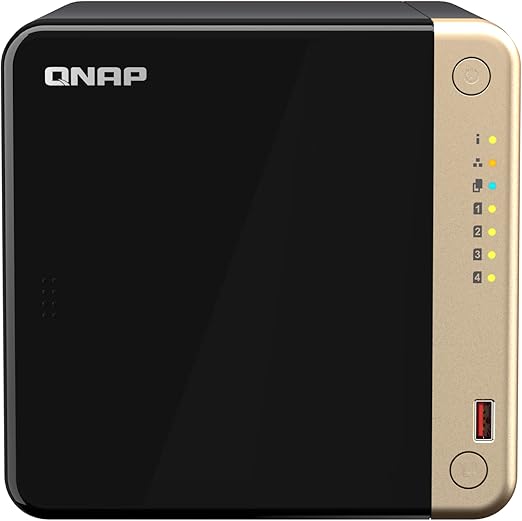 TS-464
|
|
|---|---|---|
| CPU | Intel Celeron N5105 (4-core, 2.0GHz base / 2.9GHz boost) | Intel Celeron N5095 (4-core, 2.0GHz base / 2.9GHz boost) |
| Quick Sync (HW transcode) | Yes. Intel UHD Graphics 605 | Yes. Intel UHD Graphics 605 |
| RAM | 8GB DDR4 (1× SO-DIMM, expandable to 16GB) | 8GB DDR4 (2× SO-DIMM, expandable to 16GB) |
| Drive bays | 2 × 3.5"/2.5" SATA | 4 × 3.5"/2.5" SATA |
| M.2 NVMe slots | 2 × M.2 2280 (PCIe Gen 3 × 2) | 2 × M.2 2280 (PCIe Gen 3 × 2) |
| PCIe expansion slot | None | 1 × PCIe Gen 3 × 2 (half-height) |
| Network | 2 × 2.5GbE | 2 × 2.5GbE |
| USB | 3 × USB 3.2 Gen 1, 1 × USB 3.2 Gen 2 (Type-C) | 3 × USB 3.2 Gen 1, 1 × USB 3.2 Gen 2 (Type-C) |
| HDMI | 1 × HDMI 2.0 | 1 × HDMI 2.0 |
| AU Price (approx March 2026) | ~$819 | ~$989 |
CPU and Performance: Are They Really the Same?
The TS-264 uses the Intel Celeron N5105 and the TS-464 uses the N5095. These are effectively the same chip from the same Jasper Lake generation, with identical core count (4), identical boost clock (2.9GHz), identical Quick Sync support, and identical TDP (10W). Benchmark differences between the two are within margin of error. For practical NAS workloads (Plex transcoding, Docker containers, file serving) they perform identically.
Both models support Intel Quick Sync hardware transcoding, which is the relevant performance metric for Plex and media-heavy use. Both support the same NVMe M.2 SSD caching configuration. Both run the same QTS 5.x software stack with identical app and container support.
The CPU is not a differentiator between these two models. Focus your decision on storage capacity and expansion.
Storage and RAID: The Primary Differentiator
The fundamental difference is drive bay count:
TS-264 (2 bays): Supports RAID 0, RAID 1, JBOD, and single-disk configurations. RAID 1 mirrors two drives for redundancy. You lose half your raw capacity. Maximum practical configuration: 2 × 16TB = 32TB raw / 16TB usable in RAID 1. For backup-and-access NAS use with two large drives, this is often sufficient.
TS-464 (4 bays): Adds RAID 5 and RAID 6. RAID 5 (4 drives): you lose 1 drive worth of capacity to parity, but can survive 1 drive failure. RAID 6 (4 drives): you lose 2 drives to parity, survives 2 simultaneous failures. Maximum configuration: 4 × 20TB = 80TB raw / ~56TB usable in RAID 5. For users who need more than 2 drives or want RAID 5/6 redundancy, the TS-464 is the only option.
The question to ask: Do you need RAID 5/6? If you are storing irreplaceable data and want drive-failure protection without halving your capacity (as RAID 1 does), RAID 5 on the TS-464 is the right approach. If RAID 1 with two drives covers your needs, the TS-264 is sufficient.
PCIe Expansion Slot: What It Enables
The TS-464 has a PCIe Gen 3 × 2 half-height slot that the TS-264 lacks. The most common uses for this slot:
- 10GbE network adapter: Connect the NAS to a 10GbE switch for high-speed local transfers. Useful for video editing workflows where transfer speed to/from the NAS is a bottleneck. The QXG-10G1T (QNAP's own single-port 10GbE card) fits and is supported
- Additional NVMe SSD: Some PCIe-to-M.2 expansion cards allow additional NVMe drives, either for extra SSD cache tier or all-NVMe pools
- Thunderbolt expansion: QNAP's TBT-PCIe expansion cards add Thunderbolt 3 connectivity. Relevant for video editors who want to connect a Mac directly to the NAS at high speed
For most home users and basic SOHO use, the PCIe slot will never be populated. But if there is any chance you will want 10GbE in future, the TS-464 keeps that option open. The TS-264 has no PCIe slot and cannot be upgraded for 10GbE beyond its built-in 2.5GbE ports.
Docker and Container Workloads
Both models run QNAP's Container Station with the full Docker ecosystem. For running a small number of containers (Nextcloud, Portainer, Pi-hole, Vaultwarden), both models have sufficient RAM (8GB) and CPU. The TS-264 and TS-464 are equally capable for light-to-moderate Docker workloads.
For heavier container workloads. Immich with machine learning enabled, multiple database-backed services, Jellyfin with transcoding alongside other containers. The 4-bay TS-464 has a practical advantage: the additional bays allow dedicated NVMe SSD caching for frequently-accessed container data, and the PCIe slot provides a future upgrade path for 10GbE. The CPU and RAM are the same, but the storage architecture on the TS-464 gives more headroom for growth.
🇦🇺 Australian Buyers: Pricing and Where to Buy
March 2026 AU retail pricing:
- TS-264: ~$819 (diskless). Available at Scorptec, PLE Computers, Mwave, Umart, Computer Alliance
- TS-464: ~$989 (diskless). Same retailers. The $170 price difference is roughly the cost of a single NAS hard drive
Both models include 3-year warranty from Australian retailers. QNAP AU warranty is handled through authorised distributors. Retain receipt and buy from a major AU retailer for straightforward warranty service.
Use StaticICE.com.au to compare live pricing across Australian retailers. Stock on both models is generally reliable at Scorptec and PLE.
See the full QNAP lineup guide for the complete AU model range and pricing, or the QNAP Australia brand guide for retailer recommendations and warranty advice.
Related reading: our NAS buyer's guide and our Synology vs QNAP comparison.
Use our free NAS Sizing Wizard to get a personalised NAS recommendation.
Is the TS-264 or TS-464 better for Plex?
Both are equally capable for Plex. The Intel Celeron N5105/N5095 in both models supports Quick Sync hardware transcoding with Plex Pass. Transcoding performance is identical between the two. The only Plex-relevant difference is storage: if you need more than 2 drives for your media library, the TS-464 is required. For library management up to 2 drives, the TS-264 is sufficient and cheaper.
Can I upgrade the RAM in both models?
Yes. The TS-264 has 1 × SO-DIMM slot, expandable to 16GB total (replace the stock 8GB module with a 16GB DDR4 SO-DIMM). The TS-464 has 2 × SO-DIMM slots. Stock configuration is 1 × 8GB, expandable to 2 × 8GB = 16GB by adding a second module. Both max out at 16GB. For most home NAS workloads, 8GB is sufficient. For heavy Docker workloads (Nextcloud with many users, Immich with ML, multiple database containers), upgrading to 16GB is worthwhile.
Can drives from a TS-264 be moved to a TS-464 without rebuilding?
If moving a RAID 1 pool from a TS-264 to a TS-464, QNAP supports NAS-to-NAS migration within the same QTS platform. The drives maintain their RAID configuration when moved to compatible hardware. However, this is not a trivial process: always take a full backup before any drive migration, and follow QNAP's official NAS migration guide for your specific QTS version. The migration is possible and supported, but a backup first is non-negotiable.
Does the TS-264 support RAID 5?
No. RAID 5 requires a minimum of 3 drives and the TS-264 only has 2 bays. The TS-264 supports RAID 0, RAID 1, JBOD, and single disk. If RAID 5 is a requirement, the TS-464 (or TS-433 at lower cost for a non-Intel option) is the minimum configuration.
Which is better for a small home office with 3-5 users?
The TS-464 for most home office scenarios. RAID 5 provides better storage efficiency than RAID 1 (lose 1 drive vs. half your capacity), the PCIe slot supports a 10GbE card for faster file transfers if ever needed, and 4 bays give room to grow without replacing the unit. The $170 premium over the TS-264 is justified in a shared environment where storage reliability and capacity headroom matter.
Not sure how much usable storage you'll get from your RAID configuration? The RAID Usable Capacity Calculator shows exactly what each RAID level gives you with your chosen drives.
RAID Calculator →