Australian professional services businesses face some of the most complex data retention obligations in the country. Law firms must retain trust account records for fifteen years and certain documents indefinitely. Medical and dental practices must keep patient records for a minimum of seven years, longer for minor patients. Real estate agencies are bound by state-specific transaction record requirements. Architecture and engineering firms must archive project documentation for a decade or more under professional indemnity requirements. Schools handle sensitive student data under federal and state privacy frameworks that vary by jurisdiction. Across all of these verticals, a network-attached storage (NAS) device provides the local, auditable infrastructure to meet compliance obligations without ongoing cloud subscription costs, offshore data storage risks, or vendor lock-in. This guide covers the compliance framework that applies to all Australian small businesses, followed by vertical-specific guidance for the most heavily regulated professional services sectors.
For a broader overview of this topic, see our NAS for Australian business guide.
In short: A NAS is one of the most practical ways for Australian small businesses to meet data retention and privacy obligations. It keeps your compliance data on-premises under your control, supports encrypted storage and access logging, and costs far less over five to seven years than equivalent cloud storage. Pair it with offsite backups using the 3-2-1 backup strategy to cover both compliance and disaster recovery.
What Australian Data Retention Laws Actually Require
Data retention in Australia is not a single law. It is a patchwork of obligations depending on your industry, your size, and what kind of data you handle. The most common requirements affecting small businesses are:
Tax records (ATO): All businesses must retain financial records for five years from the date they are prepared or the transaction completed. This includes invoices, receipts, bank statements, BAS records, payroll data, and superannuation records. The ATO can audit you at any time within this window, and failing to produce records on request is a penalty offence. These records must be in English, readable, and accessible. A shoebox of receipts technically qualifies, but a NAS with structured folders and automated backups is far more defensible.
Privacy Act 1988 and Australian Privacy Principles (APPs): If your business has annual turnover above $3 million, or operates in health, education, or financial services, you are bound by the Privacy Act regardless of turnover. You must store personal information securely (APP 11), only retain it for as long as needed (APP 11.2), and destroy or de-identify it when no longer required. The Notifiable Data Breaches (NDB) scheme means you must also report eligible breaches to the OAIC and affected individuals within 30 days of becoming aware of them.
Employee records: The Fair Work Act requires you to keep employee records for seven years. This includes pay slips, leave records, hours worked, superannuation contributions, and termination records. If you employ anyone. Even a single casual. This applies to you.
Industry-specific obligations: Medical practices must retain health records for varying periods (typically seven years after last contact, or until a minor patient turns 25). Legal firms must keep trust account records for seven years. Real estate agents must keep transaction records for at least three years. Builders and trades must keep records of work completed for the duration of statutory warranty periods, which vary by state but can run up to ten years in some jurisdictions.
Common mistake: Many small business owners assume the Privacy Act does not apply to them because their turnover is under $3 million. However, if you handle health information, provide services under a Commonwealth contract, or operate a small business that has opted in, the Privacy Act applies regardless of turnover. When in doubt, treat personal information as if you are covered. The cost of compliance is far lower than the cost of a breach.
Why a NAS Makes Sense for Compliance Storage
Cloud storage works for compliance, but it comes with trade-offs that many small businesses do not fully appreciate until they are locked in. A NAS addresses several compliance pain points that cloud services struggle with:
Data sovereignty: When your data sits on a NAS in your office, you know exactly where it is. Physically, legally, and jurisdictionally. Cloud providers routinely store data across multiple countries, and while major providers like Microsoft and AWS offer Australian data residency, not all plans guarantee it. For businesses handling sensitive personal information, healthcare data, or government contract data, keeping it on Australian soil (and specifically in your own premises) simplifies compliance enormously.
Access control and audit trails: Both Synology DSM and QNAP QTS provide granular user permissions, Active Directory integration for businesses already running Windows domains, and comprehensive access logs. You can prove who accessed which file and when. Exactly the kind of audit trail regulators expect. Cloud services offer similar features, but the logs are controlled by the provider, not you. With a NAS, you own the logs.
Retention policies: Synology and QNAP both support automated retention policies through their backup applications. You can configure data to be retained for exactly five years, seven years, or whatever period your obligations require, with automated deletion or archival when the period expires. This directly addresses APP 11.2's requirement to destroy data you no longer need.
Cost over time: A 4-bay NAS with 16TB of usable storage (four 8TB drives in RAID 5) costs approximately $1,500-$2,000 upfront including drives. Equivalent cloud storage for five to seven years would cost $3,000-$6,000 or more depending on the provider and plan. For compliance storage where you need to retain data for fixed periods, the NAS pays for itself within two to three years. See our NAS vs cloud storage comparison for a detailed cost breakdown.
NAS Features That Support Compliance
Not every NAS is equally suited to compliance workloads. Here are the features that matter most, and which NAS platforms deliver them.
Encryption at Rest and in Transit
APP 11 requires businesses to take reasonable steps to protect personal information from misuse, interference, loss, and unauthorised access. Encryption is the most straightforward way to demonstrate compliance. Synology DSM supports AES-256 encryption on shared folders. If the NAS is stolen, the data is unreadable without the encryption key. QNAP QTS offers both volume-level and folder-level encryption. Both platforms support encrypted connections (HTTPS, SFTP, VPN) for data in transit. If you are handling medical records, financial data, or employee records, enable encryption on every shared folder that holds personal information.
Immutable Snapshots and WORM Storage
For compliance, you need to prove that records have not been tampered with. Both Synology and QNAP support Btrfs snapshots that create point-in-time copies of your data. More critically, Synology's WriteOnce shared folders and QNAP's WORM (Write Once, Read Many) storage provide tamper-proof archives. Once data is written, it cannot be modified or deleted until the retention period expires. This is particularly valuable for financial records, legal documents, and any data subject to regulatory audit. If an ATO auditor asks whether your records could have been altered, WORM storage gives you a definitive answer.
User Permissions and Active Directory
The Privacy Act requires you to limit access to personal information to those who need it for their role. A NAS supports this through granular permissions. You can restrict payroll data to the accounts team, patient records to clinical staff, and client files to relevant project members. Synology and QNAP both integrate with Active Directory and LDAP, so businesses already running a Windows domain can extend their existing user management to the NAS without creating duplicate accounts. For smaller businesses without AD, local user groups on the NAS achieve the same outcome.
Comprehensive Logging
Access logs are your compliance safety net. Synology's Log Center and QNAP's QuLog Center record every file access, login attempt, permission change, and system event. These logs can be exported, archived, and produced to regulators on request. For businesses subject to the NDB scheme, access logs are how you determine the scope of a breach. Which files were accessed, by whom, and when. Without logs, you are guessing, and guessing is not an acceptable response to the OAIC.
Which NAS Models Suit Small Business Compliance
For compliance workloads, you need a NAS that supports Btrfs (for snapshots and WORM), has hardware encryption acceleration, and offers the management features described above. Here are the models that fit, available from Australian retailers.
Synology DS423+ (4-Bay, Small Office)
The Synology Plus series is the natural fit for small business compliance. DSM's WriteOnce folders, Synology Active Backup for Business (free, included), and comprehensive logging make it genuinely compliance-ready out of the box. The DS423+ handles five to fifteen users comfortably, supports Btrfs, and includes hardware AES-NI encryption. Synology's ecosystem. Hyper Backup, Snapshot Replication, and Active Backup. Covers both retention and disaster recovery without third-party software. For businesses that need to retain records for five to seven years and produce them on request, the Synology Plus series is the lowest-friction option.
QNAP TS-464 (4-Bay, Small to Medium Office)
The QNAP TS-464 offers WORM storage, QuLog Center for comprehensive audit logging, and QNAP's Hybrid Backup Sync for automated offsite replication. The Intel N5095 processor handles encryption and multiple concurrent users without breaking a sweat. QNAP's QuFirewall and Security Counselor add network-level protections. The TS-464 suits businesses that want more hardware flexibility. Two M.2 NVMe slots for SSD caching and two 2.5GbE ports. While still meeting compliance requirements. Available from Australian specialists like Scorptec, PLE, and DeviceDeal.
Synology DS1525+ or QNAP TS-673A (6-Bay, Growing Business)
If you expect your compliance storage needs to grow. More employees, more clients, more records. A 6-bay unit gives you room to scale without replacing hardware. Both models support expansion units for additional capacity down the line. The 6-bay form factor also allows RAID 6 for dual-drive fault tolerance, which matters when you are storing records you legally cannot afford to lose. See our best 6-bay NAS guide for detailed comparisons.
NAS Compliance Feature Comparison
| Synology DS423+ |
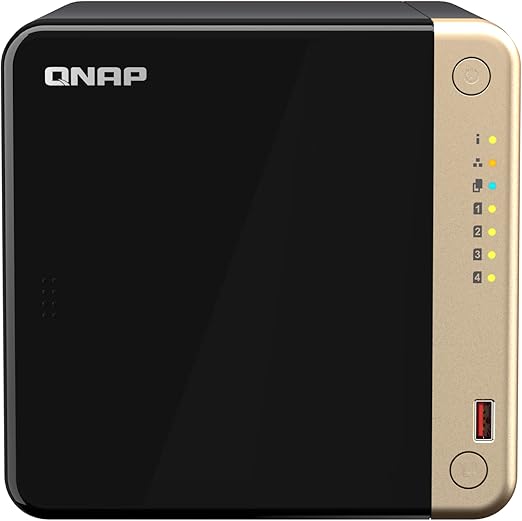 QNAP TS-464
|
 Synology DS1525+
|
|
|---|---|---|---|
| Bays | 4 | 4 | 6 |
| File System | Btrfs | Btrfs / EXT4 | Btrfs |
| WORM / WriteOnce | Yes (WriteOnce) | Yes (WORM) | Yes (WriteOnce) |
| Hardware Encryption | AES-NI | AES-NI | AES-NI |
| AD / LDAP Integration | Yes | Yes | Yes |
| Audit Logging | Log Center | QuLog Center | Log Center |
| Snapshot Support | Yes (Btrfs) | Yes (Btrfs) | Yes (Btrfs) |
| Backup Suite | Active Backup (free) | Hybrid Backup Sync | Active Backup (free) |
| Approx. AU Price (unit only) | $635 (Scorptec) | $999 (Scorptec) | $1,285 (Mwave) |
Prices last verified: 27 February 2026. Always check retailer before purchasing.
Prices are approximate based on current Australian market conditions. NAS pricing is fairly uniform across major Australian retailers due to 3-5% margins in this category. Always request a formal quote for business purchases. Resellers can often access pricing support from distributors and vendors that never appears on their website.
Setting Up a NAS for Compliance. Step by Step
Buying a NAS is the easy part. Configuring it properly for compliance is where most small businesses fall short. Here is a practical checklist that addresses the key regulatory requirements.
Step 1: Plan Your Folder Structure Around Retention Periods
Create separate shared folders for data with different retention requirements. For example: Financial Records (5-year retention), Employee Records (7-year retention), Client Data (retention varies), Operational (no mandatory retention). This makes it straightforward to apply different retention policies and access controls to each category. It also makes eventual deletion or de-identification manageable. You can review and purge one category at a time rather than combing through a single monolithic share.
Step 2: Enable Encryption on All Compliance Shares
Enable folder-level encryption (AES-256) on every shared folder containing personal or financial information. Store encryption keys securely and separately from the NAS. A USB drive locked in a safe, or a key management service. On Synology, enable encryption when creating the shared folder. On QNAP, enable volume encryption during setup. Hardware AES-NI acceleration on Plus-series and above means performance impact is negligible.
Step 3: Configure WORM or WriteOnce for Audit-Critical Data
For records that must be tamper-proof. Financial statements, contracts, medical records. Enable WORM or WriteOnce on the relevant shared folders. Set the retention period to match your legal obligation. Once enabled, files in that folder cannot be modified or deleted until the retention clock expires. This is your strongest defence against both internal tampering and ransomware, and it directly satisfies regulatory requirements for record integrity.
Step 4: Set Up Users and Permissions
Apply the principle of least privilege. Create user groups (e.g., Accounts, HR, Management) and assign folder permissions based on role, not individual. The accounts team gets read-write access to Financial Records; everyone else gets no access. HR gets access to Employee Records; everyone else does not. Document your permission structure. A simple spreadsheet showing which groups access which folders satisfies most audit requirements. Review permissions quarterly.
Step 5: Enable Logging and Schedule Log Exports
Turn on comprehensive logging in Synology Log Center or QNAP QuLog Center. Enable file access logs, authentication logs, and system event logs. Configure automated log exports to a separate location (a different NAS, a cloud target, or even an external drive) so that logs are preserved even if the NAS is compromised. Under the NDB scheme, these logs are how you determine breach scope and meet your 30-day reporting obligation.
Step 6: Implement the 3-2-1 Backup Strategy
Compliance data that exists in only one place is not compliant. It is a liability. Follow the 3-2-1 backup strategy: three copies of your data, on two different media types, with one copy offsite. Your NAS is copy one. An external USB drive or second NAS is copy two. A cloud backup target (Synology C2, Backblaze B2, or AWS S3) is copy three, offsite. Both Synology Hyper Backup and QNAP Hybrid Backup Sync handle this natively. For compliance, the offsite copy protects against fire, theft, and physical disaster. Scenarios where having the world's best NAS setup in a burnt-out office does not help.
NBN consideration: If you are backing up compliance data offsite via your internet connection, remember that typical NBN 100 plans deliver only about 20 Mbps upload (and NBN 50 plans around 20 Mbps as well). Your initial offsite backup of several terabytes could take days or weeks. Schedule it outside business hours and be patient. Also check whether your NBN connection uses CGNAT. If it does, you will not be able to access your NAS remotely without a VPN service or relay like Synology QuickConnect. See our NAS remote access guide for solutions.
NAS Security for Compliance. Protecting Against Breaches
A NAS full of personal information that gets breached is worse than having no NAS at all. Under the NDB scheme, you must report eligible data breaches within 30 days. The reputational damage, regulatory scrutiny, and potential fines make NAS security non-negotiable for compliance use cases.
Minimum Security Baseline
Before storing any compliance data on your NAS, implement these measures:
- Disable the default admin account. Create a named admin account and disable "admin" entirely
- Enable two-factor authentication (2FA) on all admin and privileged accounts
- Enable automatic updates. Both DSM/QTS and installed packages
- Enable auto-block for failed login attempts (Synology) or IP Access Protection (QNAP)
- Disable services you do not use. SSH, FTP, Telnet, UPnP, and any other service that opens an attack surface
- Do not expose your NAS directly to the internet. Use a VPN or vendor relay service for remote access
- Use HTTPS everywhere. Install a Let's Encrypt certificate through the NAS management interface
- Keep firmware current. Both Synology and QNAP have had critical vulnerabilities patched in recent years
These are not advanced measures. They are the minimum. If you are storing data that falls under the Privacy Act, anything less than this baseline exposes your business to regulatory action.
Ransomware Protection
Ransomware is the most common threat to NAS compliance data. An encrypted NAS with no accessible backups means you have lost your compliance records. And potentially breached the Privacy Act by losing control of personal information. Immutable snapshots (Btrfs) and WORM storage are your primary defences. Even if ransomware encrypts your live data, immutable snapshots allow you to roll back to a clean state. WORM-protected files cannot be encrypted by ransomware at all. Pair this with air-gapped backups (an external USB drive rotated offsite weekly) for true ransomware resilience.
Cloud vs NAS for Compliance. When Cloud Is Better
A NAS is not always the right answer. Be honest about your business's technical capability before committing to on-premises compliance storage.
Choose cloud if: You have no one on staff (or on retainer) who can maintain a NAS. You operate from multiple locations with no central office. Your compliance data is under 500GB and growing slowly. You already use Microsoft 365 or Google Workspace with Australian data residency. You do not want to be responsible for physical security of a device holding personal information.
Choose a NAS if: You want full control over where your data physically resides. You have compliance data that must be retained for five to seven years and cloud costs compound over that period. You handle sensitive data (medical, legal, financial) and want to minimise the number of third parties who could access it. You already have a reliable NBN connection and someone who can manage basic IT. You want to avoid vendor lock-in and the risk of cloud provider price increases or terms changes. For a full comparison, see our NAS vs cloud storage guide.
Best practice is both: Use a NAS as your primary compliance storage with a cloud backup target for offsite redundancy. This gives you local control, physical data sovereignty, and offsite disaster recovery. Covering all bases.
Privacy Act Obligations and Your NAS
If the Privacy Act applies to your business, here is how each relevant Australian Privacy Principle maps to NAS features:
APP 1 (Open and transparent management): Document what personal information you hold on the NAS, where it is stored, and your retention periods. A simple document stored on the NAS itself suffices. Review it annually.
APP 6 (Use or disclosure): Use NAS permissions to ensure personal information is only accessible to staff who need it for their role. Audit logs prove that access is limited to authorised users.
APP 8 (Cross-border disclosure): If your NAS backup target is an overseas cloud server, you are disclosing personal information cross-border. Use an Australian-hosted cloud target, or ensure the overseas provider meets the APP 8 requirements. Synology C2 has servers in multiple regions. Confirm you are using an Australian or approved region.
APP 11 (Security): Encryption, access controls, logging, and physical security of the NAS. Keep the NAS in a locked room or cabinet. Enable encryption on all compliance shares. This is the APP most directly served by a properly configured NAS.
APP 11.2 (Destruction and de-identification): When retention periods expire, securely delete the data. Synology and QNAP both support secure erase of individual files and full volume wipes. Document the deletion with a log entry. For drives being decommissioned, use the NAS's built-in secure erase or physically destroy the drives.
Law Firms and Legal Practices
Australian law firms generate document volumes that compound rapidly over the life of a practice. Matter files, client correspondence, court filings, contracts, discovery documents, and trust account records must all be stored securely, retained for defined periods, and accessible on demand for audits, court proceedings, and law society reviews. A NAS provides the on-premises file server that most Australian legal practices need. With RAID redundancy to protect against drive failure, user-level access controls to enforce privilege boundaries, and encrypted shared folders to protect client confidentiality. Unlike cloud platforms where data may traverse offshore servers, a NAS keeps privileged communications physically within your practice under your direct control.
Legal record retention in Australia is governed by state-based legal profession legislation, trust account regulations, the Privacy Act 1988, and professional conduct rules. General matter files require a minimum seven-year retention period. Trust account records carry a fifteen-year retention obligation in most jurisdictions. Wills, deeds, powers of attorney, and certain conveyancing documents require indefinite retention. Rule 9 of the Australian Solicitors’ Conduct Rules imposes a duty of confidentiality that survives the end of the solicitor-client relationship. Which has direct implications for how client files are stored, accessed, and eventually destroyed. NAS encryption, granular user permissions, and access logging directly address these obligations and provide the audit trail that law society reviews and professional indemnity insurers expect.
For a sole practitioner or two-person practice, the Synology DS225+ (~$549 from Scorptec) provides a 2-bay RAID 1 mirror adequate for text-heavy matter files. Small firms of two to five lawyers should consider the Synology DS925+ (~$995) or QNAP TS-464 (~$999). 4-bay units that support RAID 5, AES-256 shared folder encryption, Active Directory integration, and the access logging needed to satisfy professional conduct requirements. Firms with five or more lawyers, particularly those handling litigation with large discovery datasets, should look at the Synology DS1525+ (~$1,399) or DS1825+ (~$1,799), which provide five and eight bays respectively with RAID 6 two-drive fault tolerance. Request a formal quote from Scorptec or PLE rather than buying at listed retail. Resellers can access distributor pricing support that does not appear on retailer websites.
Medical and Dental Practices
Medical and dental practices run some of the most storage-intensive workloads in Australian small business. Clinical records, referral letters, pathology results, dental imaging (panoramic X-rays, OPGs, CBCT scans), Medicare billing records, and practice management system backups all require secure, accessible local storage. Most Australian practice management systems. Best Practice, Medical Director, Dental4Windows, and EXACT. Are designed around local or network storage. A NAS provides the shared storage these systems depend on, with RAID redundancy to protect against drive failure, encrypted folders to protect patient data at rest, and snapshot-based recovery to roll back ransomware or accidental deletions. Dental CBCT imaging is particularly storage-intensive: individual scans can run to several hundred megabytes, and a multi-chair practice with active imaging accumulates terabytes of image data over its operating life.
Healthcare data retention is governed by the Privacy Act 1988 (specifically the Australian Privacy Principles), the My Health Records Act 2012, and state health records legislation including Victoria’s Health Records Act 2001 and NSW’s Health Records and Information Privacy Act 2002. The baseline retention period is seven years from the last date of service. For patients who were minors, records must be retained until the patient turns 25 or for seven years after the last service, whichever is longer. AHPRA-registered practitioners have additional obligations under Medical Board and Dental Board guidelines. Failure to produce records in response to an AHPRA inquiry is itself a conduct issue. APP 11 requires reasonable steps to protect personal information from misuse and unauthorised access, which translates into mandatory encryption, access controls, and audit logging for any NAS holding patient data.
A 4-bay NAS is the practical minimum for a healthcare practice. The Synology DS423+ and QNAP TS-464 both suit practices with one to three practitioners and light to moderate imaging workloads. Four bays in RAID 5 or SHR with 4 x 8TB NAS-grade drives provides approximately 24TB usable with single-drive redundancy. Practices with CBCT scanners or four or more practitioners should consider the Synology DS1525+ (~$1,399) for additional capacity and RAID 6 dual-drive fault tolerance. Always use Seagate IronWolf or WD Red Plus NAS-grade drives. Desktop drives are not rated for the continuous multi-user operation that a practice NAS requires. Buy from an Australian authorised retailer to preserve Australian Consumer Law guarantee rights on a device holding irreplaceable patient records.
Real Estate Agencies
Real estate agencies generate one of the highest volumes of unstructured media data in any small business category. A typical listing produces 30 to 80 high-resolution photos, a drone walkthrough video of 500MB to 2GB, floor plans, 3D virtual tour data, and vendor documents including contracts of sale and disclosure statements. An agency handling 100 listings per year accumulates 300GB to 1TB of new data annually from media alone. A NAS centralises all of this in a structured, searchable folder hierarchy accessible to every agent and admin staff member on the network, replacing the scattered combination of personal laptops, USB drives, and cloud subscriptions that most agency storage currently relies on. RAID redundancy protects against the drive failure that would otherwise destroy an entire season’s worth of listing assets without warning.
Real estate agencies handling personal information. Identification documents, financial statements, tenancy applications. Are subject to the Privacy Act 1988 if annual turnover exceeds $3 million. APP 11 requires reasonable steps to protect personal information from misuse and unauthorised access. Document retention periods vary by state: NSW agents must retain records for three years after a transaction; Victoria requires at least seven years. Agencies managing trust accounts have additional record-keeping obligations under state real estate legislation. User-level folder permissions, AES-256 encryption, and NAS access logging provide the compliance posture that agency principals need to satisfy regulatory audits from Consumer Affairs, state property services regulators, or the OAIC.
A boutique agency or sole agent is well served by the Synology DS225+ (~$549) with 2 x 8TB drives in RAID 1. 8TB usable is adequate for a solo operator’s listing archive. For a single-office agency of three to ten staff, the Synology DS425+ (~$819) or QNAP TS-464 (~$999) are strong 4-bay options providing approximately 24TB usable in RAID 5. The QNAP TS-464’s dual 2.5GbE ports are particularly useful in agencies where multiple staff simultaneously upload large photo and video sets from shoots. Multi-branch agencies or high-volume drone and 3D tour producers should look at the Synology DS1525+ (~$1,399), which supports five bays, 10GbE networking via PCIe expansion, and Synology Drive’s mobile app ecosystem for field access and listing folder sync to agents’ laptops.
Architecture and Engineering Firms
Architecture and engineering firms produce some of the largest working files in any professional environment. A single Revit central model for a commercial project commonly reaches 200MB to 500MB. SolidWorks assemblies with simulation data routinely exceed 2GB. A coordinated BIM project with linked consultant models can push past 50GB. Managing files of this size through cloud storage. Or over a typical NBN connection. Creates the workflow delays that cost billable hours. A NAS with adequate network throughput (2.5GbE as a minimum for small practices, 10GbE for teams running Revit worksharing or SolidWorks PDM) provides the performance that design workflows require. Synology Drive’s automatic file versioning is particularly valuable: every save of a CAD or BIM file creates a recoverable version, protecting against accidental overwrites of coordinated models without requiring team members to manage manual save copies.
Archival requirements for architecture and engineering firms extend well beyond general small business obligations. Professional indemnity insurance policies typically require project documentation to be retained for a minimum of ten years after project completion. And some policies specify fifteen years or the life of the building. Engineering firms operating under Engineers Australia professional standards have additional documentation obligations. State building authorities require retention of as-built drawings and project records. A NAS with RAID protection, automated integrity checking (Synology Data Scrubbing or QNAP storage health checks), and offsite backup replication provides the structured, searchable archive needed to meet these long-horizon retention requirements. And to retrieve a specific drawing from a decade-old project on short notice when a professional indemnity claim is raised.
For a sole practitioner or two-person practice working primarily with AutoCAD and ArchiCAD, the Synology DS925+ (~$995) handles file serving for two to five concurrent users over its built-in 2.5GbE with NVMe SSD caching. Teams of three to six running Revit worksharing should strongly consider the Synology DS1525+ (~$1,399) with a 10GbE expansion card (~$289). The additional network throughput directly reduces Revit sync times and eliminates the file lock conflicts that slow multi-user worksharing on standard 1GbE connections. Engineering firms with six or more staff handling SolidWorks or FEA simulation data should look at the QNAP TS-473A (~$1,369), whose AMD Ryzen V1500B processor and expandable RAM (up to 64GB) sustain heavier concurrent workloads than Celeron-based alternatives. Factor ten-year archival storage requirements into initial capacity planning.
Schools and Education Providers
Australian schools face a storage challenge that combines enterprise IT requirements with the budget constraints of a public institution. Staff shared drives hold curriculum documents, reports, and assessment records. Administration systems store enrolment data, attendance records, medical alerts, and financial information. Media production classes generate video projects exceeding 50GB per student. Surveillance cameras run continuously, generating footage retained for weeks or months. A NAS addresses all of these workloads in a single device that integrates with Active Directory or Azure AD for user authentication, supports Synology Surveillance Station or QNAP QVR Pro for camera recording, and provides automated backup infrastructure for nightly student information system exports. All manageable by a single IT coordinator without dedicated systems administration resources.
Student data privacy is governed by overlapping federal and state requirements. The federal Privacy Act 1988 applies to all independent and Catholic schools regardless of turnover, and to government schools exceeding the $3 million annual turnover threshold. State Department of Education frameworks. Victoria’s Information Security Management Framework, NSW’s Cyber Security Policy, and Queensland’s Information Security Policy. Impose requirements on government schools around data classification, encryption, access control, and incident reporting. Cloud storage is not automatically compliant: some state DET policies restrict where student data can be stored geographically, and providers who reserve the right to process data overseas may not meet those requirements. A NAS that stores student data on Australian premises under the school’s direct control simplifies compliance with geographic residency requirements.
A primary school or small secondary with under 500 students is well served by the Synology DS425+ (~$819) or QNAP TS-464 (~$999). The QNAP TS-464 has a meaningful licensing advantage for schools running security cameras: it includes eight free QVR Pro camera licences compared to Synology’s two, saving hundreds of dollars in upfront licensing costs for schools with more than a handful of cameras. Larger secondary schools with media production programs or heavier surveillance loads should look at the Synology DS1525+ (~$1,399). Five bays, AMD Ryzen processing, and expansion unit support for storage growth. Education and government buyers should always request a formal quote from Scorptec, PLE, or education-focused resellers. Pricing support through Dicker Data and BlueChip is routinely available for education purchases and never appears on retailer websites.
Buying a Compliance NAS in Australia. Practical Advice
Business models and rackmount NAS units are rarely held in retailer stock. Even when listed as "in stock," expect two to three days for the retailer to process through their distributor's dropship process. If you need a NAS urgently for a compliance deadline, buy from a retailer with confirmed stock. specialist retailers like Scorptec, PLE, and DeviceDeal list most Synology and QNAP models and typically hold Plus-series units in stock or can source them within days via BlueChip or Dicker Data.
Australian Consumer Law protections apply when purchasing from Australian retailers. For a compliance NAS that will store business-critical data for five to seven years, buy from an authorised Australian reseller. ACL gives you rights to repair, replacement, or refund for major failures. Rights that do not apply to grey imports or international purchases. When your data retention obligations depend on the hardware, the warranty and support relationship with your retailer matters as much as the NAS specs.
Always request a formal quote for business NAS purchases. Resellers can request pricing support from distributors and vendors. Discounts that never appear on the website but are routinely available for quoted deals. For government and education buyers, additional pricing structures and procurement processes apply. Do not just add to cart and check out.
Factor in the total cost of ownership: NAS unit, drives (NAS-grade drives are essential. Desktop drives are not designed for always-on operation), a UPS for power protection, and optionally an offsite cloud backup subscription. NAS-grade drive prices have risen significantly from early 2025 levels, with 4TB NAS drives now consistently above $200. Budget accordingly and check current pricing before committing.
Common Compliance Mistakes with NAS Storage
These are the mistakes that trip up small businesses most often when using a NAS for compliance:
- No offsite backup: A NAS with no offsite copy is a single point of failure. Fire, theft, or flood destroys both your live data and your compliance records. The 3-2-1 strategy is non-negotiable.
- Default admin account left enabled: The single most common NAS security vulnerability. Disable it during initial setup.
- No documented retention policy: Having the data on a NAS is not compliance. You need a written policy stating what you keep, for how long, and when you delete it. Without documentation, you cannot demonstrate compliance to a regulator.
- Never testing restores: Backups that have never been tested are not backups. Schedule quarterly restore tests of your compliance data to confirm it is recoverable.
- Ignoring firmware updates: Both Synology and QNAP have had critical vulnerabilities. An unpatched NAS holding personal information is a breach waiting to happen, and under the NDB scheme, you may be obligated to report it.
- Keeping data forever: Retention obligations have expiry dates. Keeping personal information indefinitely violates APP 11.2. Set calendar reminders to review and purge expired data annually.
Beyond document storage, NAS hardware can also run local AI models for document search, OCR, and summarisation. Keeping all data on Australian soil under the Privacy Act. See: Local AI for Small Business Australia. Privacy, Cost and Compliance.
Related reading: our NAS buyer's guide.
Schools and education providers face their own compliance requirements around student data. Our NAS for Schools and Education guide covers the specifics. Data retention rules, recommended setups, and budget-appropriate hardware.
Our NAS Sizing Wizard helps size storage for business compliance workloads, and our Backup Storage Calculator estimates the backup capacity needed to meet AU data retention requirements.
Does the Privacy Act apply to my small business?
The Privacy Act 1988 applies to businesses with annual turnover above $3 million, as well as all health service providers, businesses that trade in personal information, and businesses that provide services under a Commonwealth contract. Regardless of turnover. If you handle employee records, customer personal data, or health information and fall into any of these categories, you are covered. Even if you are technically exempt, following the Australian Privacy Principles is good practice and protects your business if the law changes (reform is currently under discussion).
How long do I need to keep business records on my NAS?
ATO requires financial records for five years. The Fair Work Act requires employee records for seven years. Medical records must be kept for seven years after last contact (or until a minor patient turns 25). Legal trust account records require seven years. In general, when multiple obligations overlap, keep data for the longest applicable period. Structure your NAS shared folders around these retention periods so you can manage them independently.
Is a NAS sufficient for compliance or do I also need cloud backup?
A NAS alone is not sufficient for robust compliance. While it meets data sovereignty, access control, and retention requirements, it does not protect against physical disasters that could destroy the NAS and all your records. A cloud backup or offsite copy is essential for disaster recovery. The 3-2-1 backup strategy. Three copies, two media types, one offsite. Is the minimum standard. Both Synology and QNAP offer native cloud backup integration.
Can I access my compliance NAS remotely when working from home?
Yes, but do it securely. The safest approach is a VPN connection to your office network, which gives you encrypted access to the NAS without exposing it to the internet. Synology offers QuickConnect and QNAP offers myQNAPcloud as relay services that avoid the need for port forwarding. If your NBN connection uses CGNAT (common on some fixed wireless and satellite plans), direct VPN access will not work. You will need to use the vendor's relay service or a third-party VPN provider. See our remote access guide for detailed setup instructions.
What happens if my NAS is breached. What are my obligations?
If your business is covered by the Privacy Act and experiences a data breach that is likely to result in serious harm, you must notify the OAIC and affected individuals within 30 days under the Notifiable Data Breaches scheme. You need to assess the breach scope (this is where NAS access logs are critical), contain it, and report it. Penalties for failing to report can be significant. Having comprehensive logging enabled on your NAS is the difference between knowing exactly what was accessed and guessing.
Which is better for compliance. Synology or QNAP?
Both platforms meet compliance requirements equally well. Synology DSM is generally easier to configure and has a more polished interface, which matters if your IT skills are limited. QNAP offers more hardware flexibility (more RAM, better expansion options) and slightly more granular settings. Synology's WriteOnce shared folders and free Active Backup suite are strong compliance features. QNAP's WORM storage and QuLog Center are the equivalent. Choose based on your comfort level and existing IT environment rather than compliance capability. Both are fully capable. See our small business NAS guide for model-specific recommendations.
Do I need a RAID configuration for compliance storage?
RAID is strongly recommended but not legally required. RAID protects against drive failure. Without it, a single drive failure means you lose your compliance records. RAID 1 (mirror) or RAID 5 (striping with parity) are the most common for small business NAS. RAID 5 on a 4-bay NAS gives you three drives of usable space with one-drive fault tolerance. RAID 6 on a 6-bay NAS gives you four drives of usable space with two-drive fault tolerance. For data you are legally required to retain, RAID is not optional in practice, even if no law specifically mandates it.
Need help choosing the right NAS for your business compliance requirements? Our small business NAS guide covers the best models available from Australian retailers, with real specs and pricing.
Read the Small Business NAS Guide →